
Characteristics of the Tea Leaf, 1653 A.D.
Martino Martini of the Society of Jesus
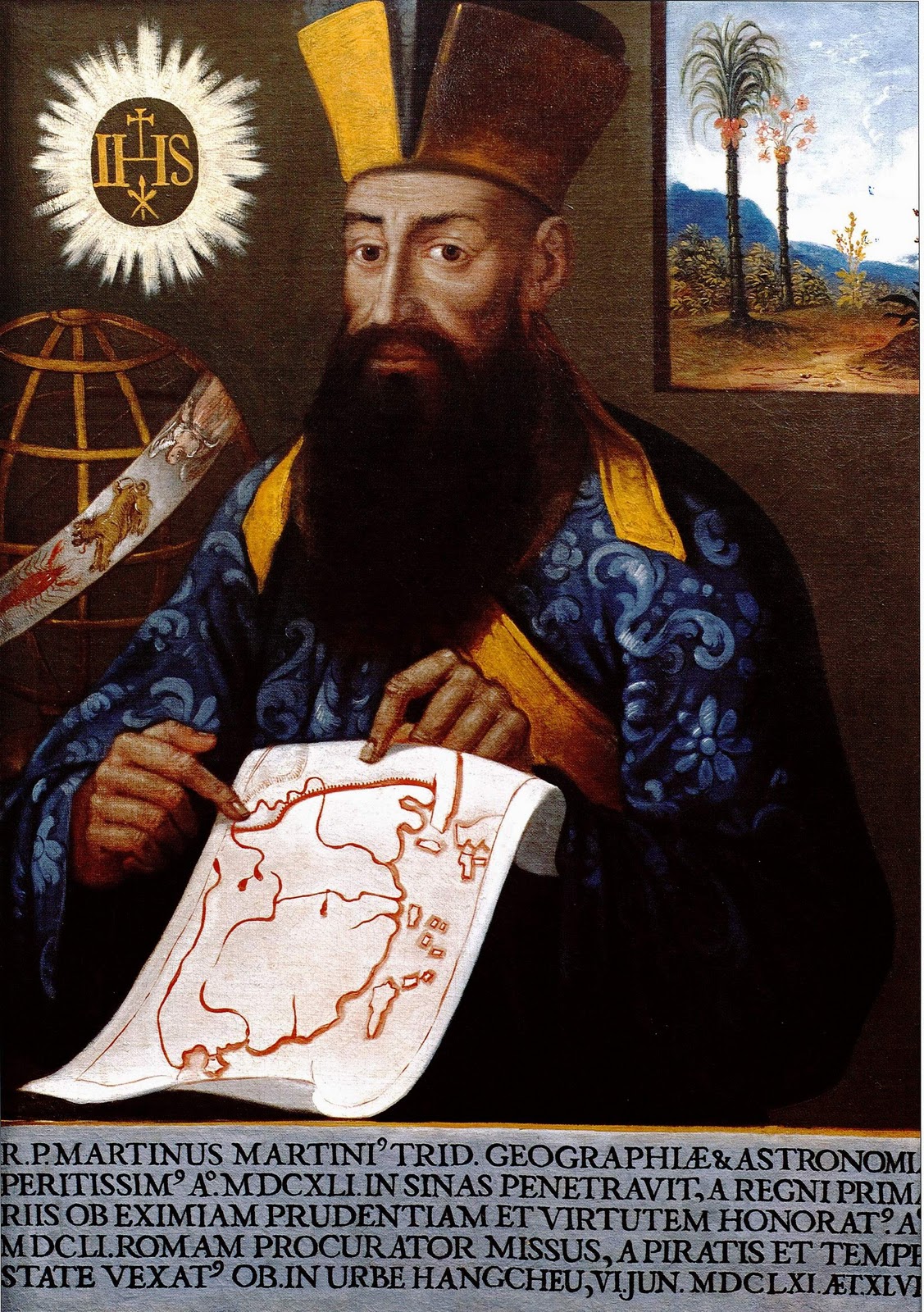
Portrait of Martino Martini, 1661
Characteristics of the Tea Leaf
There is nothing superior to the famous tea leaf. To satisfy the curious reader and students of botany, here is a brief description:
The small leaf is wholly like that produced by Rhus Coriaria, sumac; however, I am not persuaded that it is of the same species. It is not wild but cultivated, not a tree but a bush that spreads in various branches and twigs, nor does the flower differ much from that of the sumac, except that the white color tends somewhat to yellow. In summer, the flower is fragrant with a light perfume; the green berry follows, and then blackens. To brew the drink Cha, the first tender leaves of spring are sought and gathered, carefully and individually by hand. Then the leaves are warmed a little over a slow fire in an iron pan, and then placed on a matt and rolled by hand, and then fired and rolled again until curled and quite dry. The tea is kept in containers of tin, its essence carefully preserved against all humidity. Even kept after a long while, when cast into boiling water, the leaves uncurl and return to their original greenness. If the tea is of the best quality, the fragrance is sweet and the taste not unpleasant, once used to it, and suffuse with a greenish color. Though many deprecate the virtues and power of this hot beverage, the Chinese drink it often, day and night, and welcome friends with it. Moreover, many varieties of superior tea rise in price to over two gold pieces per pound. Those who drink tea get neither gout nor stones. After eating, it relieves indigestion and aids digestion. Tea may be taken to alleviate inebriation, to refresh and reinvigorate, to relieve hangovers, and it may be used as a diuretic to dispel extraneous fluids. Tea is for those who wish to remain awake and banish sleep and to ward off drowsiness from those who want to study. In China, tea is named after its locale, such as the excellent and famous Sunglo cha. For a fuller description of tea, see the work published in French by Alexander de Rhodes, who describes tea more at length, in the section, Kingdom of Tunking part I, chapter 15.
Cha folium quale.
Folium Cha nominatissimum nusquam alibi, quam hic praestantius est. id in gratiam curiosi lectoris, ac Botanices studiosi brevibus describam:
Foliculum est omnino illi simile, quod rhus coriaria profert, imo illius quandam esse speciem tantum non mihi persuadeo, non tamen sylvestre illud, sed cultum est, non arbor, sed virgultum est, quod in ramulos varios, aut virgulas potius sese diffundit, nec flore admodum differt, nisi quod hujus albedo nonnihil magis in flavedinem declinet; aestate primum florem emittit levi odore fragrantem, sequitur bacca viridior, mox nigricans: pro potione Cha coquenda expetitur folium primum vernum, ac mollius, quod studiose ac sigillatim unum post alterum manu carpunt, mox in ferreo cacabo tenui ac lento igne aliquantulum calefaciunt, deinde supra stoream subtilem ac laevem manibus propellendo involvunt, atque involutum iterum exponunt igni, ac denuo confricant, donec intortum rursus & conglomeratum plane siccum sit: quod servant in vasis plerumque stanneis ab omni humiditate diligentissime & evaporatione custoditum; hoc cum in ebullientem aquam conjicitur etiam post diuturnam asservationem, ad pristinum virorem redit seque expandit, aquam odore suavi, si optimum est, saporeque non ingrato, praesertim ubi adsueveris, ac colore subviridi inficit. Multis hujus calidi potus vires ac virtutem depraedicant Sinae, qui eo noctu & interdiu frequentissime untuntur, hospitesque excipiunt. tanta autem ejus varietas, ac praestantiae discrimen est, ut librae pretium apud ipsos Sinas ab obolo ascendat ad duos plureique aureos: illi potissimum adscribitur, quod Sinae podagram ac calculum nesciant; post cibos sumptum omnem indigestionem ac cruitatem stomachi tollit; maxime enim concoctionem juvat, quin & ab ebriis adhibitum levamen iis, novasque ad potitandum vires affert, adeogue & crapulae omnes molestias levat, siquidem exsiccate & abstergit superfluos humores, ac vigilare cupientibus somniferos vapors expellit, oppressionemque somni studiis vacare volentibus arcet. varia apud Sinas habet nomina; juxta varia loca, eamque, quam obtinet, praestantiam hujus urbis praeclarissimam Sunglocha vocari solet. Pleniorem si quis illius descriptionem desideret, consulat Gallice editum R.P. Alexandrum de Rhodes, qui illud fusius describit, de regno Tunking parte I, cap. 15.
Source
Martino Martini, S.J. (Italian, 1614-1661 A.D.), Novus Atlas Sinensis (New Atlas of China) (Vienna, 1653 A.D.), part 6 of Joan Blaeu (Dutch, 1596-1673 A.D.), Theatrum Orbis Terrarum; sive, Atlas novas (Theater of the World; or New Atlas; a.k.a. Atlas Maior) (Amsterdam: Joan Blaeu, 1662), p. 83.
Compare
Eusèbe Renaudot (French, 1646-1720 A.D.), trans., Ancient accounts of India and China (London: S. Harding, 1733), p. 73; William Crook (English, active ca. 1685 A.D.), The New Relation of the Use and Virtue of Tea printed for W. Crook at the sign of the Green Dragon without Temple Bar, London (1685) cited in Timothy J. Bond, “The Origins of Tea, Cocoa, and Coffee as Beverages,” Teas, Cocoa and Coffee: Plant Secondary Metabolites and Health, lan Crozier, Hiroshi Ashihara, Francisco Tomás-Barbéran, eds. (Chichester: John Wiley & Sons, 2011), p. 12; Athanasius Kircher, S.J., China Illustrata (1667), Charles D. Van Tuyl, trans. (Muskogee: Indian University Press, 1987), part IV, chap. 6, p. 175; and Bianca Maria Rinaldi, The “Chinese garden in good taste”: Jesuits and Europe’s knowledge of Chinese flora and art of the garden in the 17th and 18th centuries (Munich: Meidenbauer, 2006), pp. 99-100. For the missionary work of Martini, see David E. Mungello, The Forgotten Christians of Hangzhou (Honolulu: University of Hawaii, 1994), pp. 9-59, passim.
Figure
Artist unknown
European, 17th century A.D.
Portrait of Father Martino Martini, 1661 A.D.
oil painting, inscribed:
“The Reverend Father Martino Martini of Trent,
a man of extraordinary skill in geography and
astronomy, who entered China in the year 1641.
Having been honored by the leading men of the realm
because of his exceptional knowledge and virtue,
he was sent to Rome as a [Jesuit] procurator in the
Year 1651. [During the journey,] he was subjected to
hardship by pirates and storms. He died in the city
of Hangzhou on 6 June 1661 at the age of
forty-seven.” (David E. Mungello, trans.)
Museo Provinciale d’Arte
Buonconsiglio Castle, Trento
Report Submitted to the Commandant
壺蘆居士翻譯
Choe Chiwon of the Silla dynasty
Report Submitted to the Commandant
Wondering, “who from Within the Seas cares for one from without?”
I then ask where to find the river crossing.
I only sought service, not profit;
To honor my family, not myself.
On the journey, a sorrowful parting: rain on the river.
Returning home: a day in dream, touched by spring.
Crossing the water, I happily meet broad, favorable waves:
Each washes from my tassels all ten dusty years.
新羅 崔致遠
陳情上太尉
海內誰憐海外人
問津何處是通津
本求食祿非求利
只爲榮親不爲身
客路離愁江上雨
故園歸夢日邊春
濟川幸遇恩波廣
願濯凡纓十載塵
Source
Choe Chiwon 崔致遠 (최치원, 857- ca. 924 A.D.), comp., Gyewon pilgyeong jip 桂苑筆耕集 (계원필경집, Plowing the Cassia Grove with a Brush, 886 A.D.), ch. 20.
Spoiled Daughters
Hulu jushi fanyi
Zuo Si (250-305 A.D.) of the Western Jin dynasty
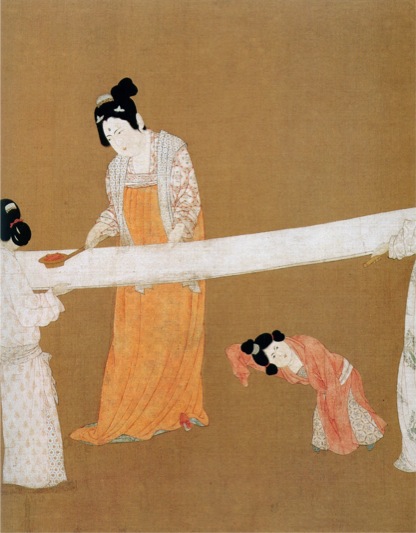
Spoiled Daughters
In my house there is a lovely girl,
Exceedingly fair, clear and shining.
Her nursery name is Wansu, White Silk.
Her mouth and teeth are finely formed,
Lush side locks spread across her high brow,
Ears like twin jades.
In the morning, she plays makeup at the comb stands,
Eyebrows blackened as if with a broom.
Thick vermillion slathers cinnabar lips,
Young mouth swelling full and crimson.
Her dainty talk is like tinkling links of jade,
In a temper, her words ring sharp and clear.
When writing, she prefers the red lacquered brush,
But her seal script characters are hopeless.
Holding a book, she delights in the pure silk cover,
During recitations, she boasts of what she’s learned.
Her older sister is Huifang, Gentle Fragrance,
Whose face is splendid like in a painting.
Lightly adorned, she amuses herself about the house.
Before the mirror, she forgets her spinning.
She holds her cosmetic brush, imitating Zhang Chang,
Painting beauty spots, then changing them around.
She plays at putting them on her cheeks, then
Rushes to double her time at the loom.
Calm and composed, she excels at the Zhao dance,
Her outstretched sleeves like wings in flight.
When playing the zither up and down to the very ends of the stops,
Literature and history books are suddenly rolled and folded up.
Glancing at a painted screen,
She is all ready to be critical.
The painting long obscured by dust,
Once clear, its meaning is unfathomable.
Together, the children fly, galloping into the orchard,
Beneath the fruit, picking all the green ones.
Red petals still capped on purple calyxes,
The unripe fruit thrown all about.
Greedy for flowers, even in wind and rain,
They bolt outdoors hundreds of times.
Tramping about on bright snow in play,
Tangled layers of shoelaces in constant jumbles.
Their hearts bent on sumptuous delicacies,
They sit up straight and arrange their saucers and plates.
Brush and ink put away in the writing box,
Often left useless and forgotten.
Seduced by the tea peddler’s gong, they succumb,
Slippered feet rushing out to their pleasure.
So impatient for tea,
They huff and puff at his brazier.
Grease smearing white sleeves,
Smoke staining fine silk.
Their heavily embroidered clothes are
Tough to wash and clean.
Because I let them do as they please,
They are abashed when scolded by elders.
Knowing they’re in for a spanking,
They hide their tears and face the wall.
西晉左思
嬌女詩
吾家有嬌女 皎皎頗白皙
小字為紈素 口齒自清歷
鬢發覆廣額 雙耳似連璧
明朝弄梳台 黛眉類掃跡
濃朱衍丹唇 黃吻瀾漫赤
嬌語若連瑣 忿速乃明劃
握筆利彤管 篆刻未期益
執書愛綈素 誦習矜所獲
其姊字惠芳 面目粲如畫
輕妝喜樓邊 臨鏡忘紡織
舉觶擬京兆 立的成復易
玩弄眉頰間 劇兼機杼役
從容好趙舞 延袖象飛翮
上下弦柱際 文史輒卷襞
顧眄屏風畫 如見已指摘
丹青日塵暗 明義為隱賾
馳騖翔園林 果下皆生摘
紅葩綴紫蒂 萍實驟抵擲
貪華風雨中 眒忽數百適
務躡霜雪戲 重綦常累積
並心注肴饌 端坐理盤槅
翰墨戢函案 相與數離逖
動為壚鉦屈 屣履任之適
止為荼荈據 吹吁對鼎䥶
脂膩漫白袖 煙薰染阿錫
衣被皆重地 難與沉水碧
任其孺子意 羞受長者責
瞥聞當與杖 掩淚俱向壁
Source
Xü Ling 徐陵 (507-583 A.D.), Yütai xinyong 玉臺新詠 (New Poems from the Jade Terrace, ca. 545 A.D.), juan 卷2 and Qüan Han Sanguo Chin Nanbei chao shi 全漢三國晉南北朝詩 (The Complete Poetry of the Han, Three Kingdoms, Chin and Northern and Southern Dynasties), Ding Fubao 丁福保 (1874–1952 A.D.), comp. Taibei: Shijie shujü, 1969), vol. 1, ch. 4, pp. 387-388.
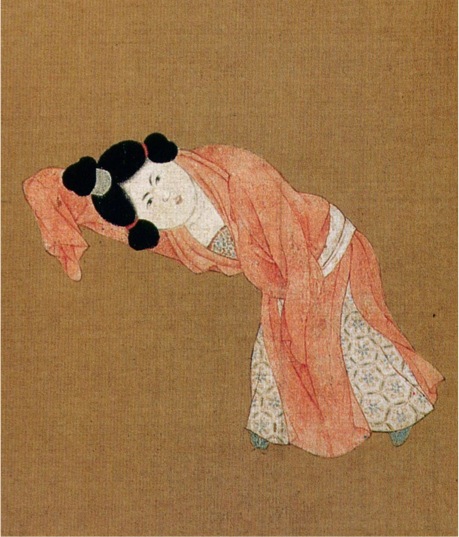
Figure
Emperor Huizong 徽宗 (1082–1135 A.D.), attributed to
Daolian tu 搗練圖 (Court Ladies Preparing Newly Woven Silk, early 12th century A.D.)
Northern Song Dynasty
Handscroll: ink, color, and gold on silk, details
Museum of Fine Arts, Boston
Special Chinese and Japanese Fund 12.886
A Song of Drinking Tea to Chide the Envoy Cui Shi
Hulu jushi fanyi
Jiaoran (730-799 A.D.) of the Tang dynasty
A Song of Drinking Tea to Chide the Envoy Cui Shi
The man from Yue presented me with Shan River tea;
Picking the golden buds, brewing them with a bronze brazier.
In a plain, snow-white porcelain, a fragrant, misty froth.
Does this not transcend the elixir of the immortals?
The first drink washes away confusion and sleep –
a clear, bright feeling fills Heaven and Earth.
The second drink purifies my spirit –
a sudden, flying rain lightly scatters the dust.
The third drink simply achieves the Dao –
no need to fuss about banishing troubles and cares.
Of this pure and lofty thing, the world is unaware.
People drinking wine only deceive themselves:
Fretting about the night Bi Zhuo lay soused under the wine vat;
Laughing at the time Tao Qian lay drunk under the hedge.
Lord Cui drinks tea relentlessly, as if
Insanely singing a single tune, shocking everyone.
Who knows the true Way of Tea?
Only Danqiu attained this.
唐皎然
飲茶歌誚崔石使君
越人遺我剡溪茗
採得金牙爨金鼎
素瓷雪色縹沫香
何似諸仙瓊蕊漿
一飲滌昏寐
情來朗爽滿天地
再飲清我神
忽如飛雨洒輕塵
三飲便得道
何須苦心破煩惱
此物清高世莫知
世人飲酒多自欺
愁看畢卓瓮間夜
笑向陶潛籬下時
崔侯啜之意不已
狂歌一曲驚人耳
孰知茶道全爾真
唯有丹丘得如此
Source
Cao Yin 曹寅 (1658-1712 A.D.) and Peng Dingqiu 彭定求 (1645-1719 A.D.) et al., comps, Quan Tangshi 全唐詩 (Complete Poetry of the Tang Dynasty, 1705), ch. 821, no. 61.
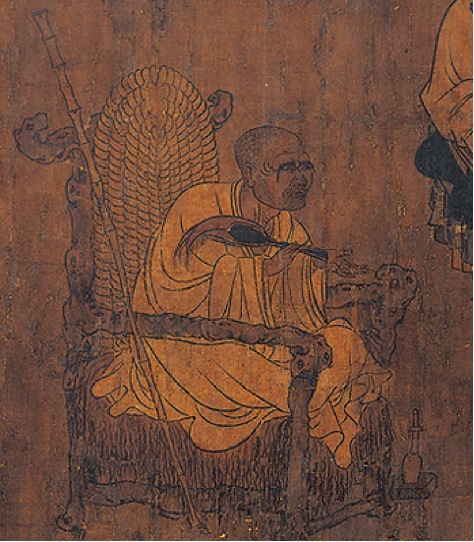
Figure
Yan Liben 閻立本 (ca. 601-673 A.D.), attributed to the monk Biancai 辯才 (active circa 600-649 A.D.)
Xiao Yi zuan Lanting tu 蕭翼賺蘭亭圖 (Xiao Yi Stealing the Orchid Pavilion Preface)
Tang dynasty
Handscroll: ink and color on silk, detail
National Palace Museum, Taipei
Compare
Mattias Daly, translator
“A Tea-Drinking Song That’s All Minister Cui Shi’s Fault”
Global Tea Hut (Winter 2025), p. 76.
A fellow from Yue left me some tea from the River Shan,
Picked from golden buds and heated in a golden cauldron.
Fragrant, pale green, ground tea in simple, snow-white porcelain,
How could it be so like the nectar sipped by Daoist immortals?
The first steeping washes away my drowsiness,
My brightened thoughts briskly filling the Heavens and the Earth.
The next steeping clears my spirits,
As suddenly as flying raindrops wash away fine dust.
At the third steeping we suddenly attain the Dao—
What need is there to arduously shatter our defilements?
This stuff is so exquisite no-one’s even heard of it,
You people in the world sipping booze are kidding yourselves.
We look with concern at Bi Zhuo spending his nights in his wineglass,
And laugh at Tao Qian there beneath his hedge.
Minister Cui gulps it, his inspiration so endless
That he sings a wild song that scandalizes my ears.
Who knew the way of tea is as complete as it is true,
Only Danqiu ever attained anything quite like this.
Tea Stove
Hulu jushi fanyi
Zhu Xi 朱熹 (1130-1200 A.D.) of the Southern Song Dynasty
Tea Stove
Old Immortal unveils a stone stove
Right in the middle of the water.
Tea drunk, our skiffs drift together.
The scent of tea…lingering delicate fragrance.
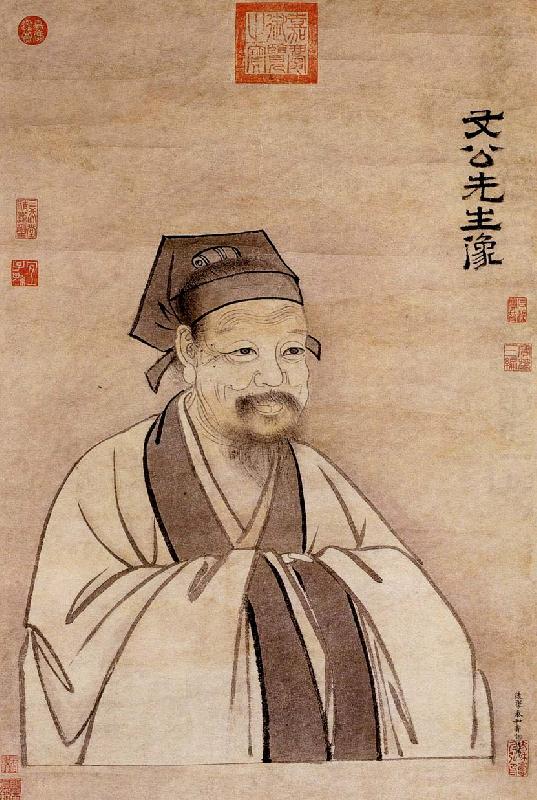
Portrait of Zhu Xi
茶灶
仙翁遺石灶
宛在水中央
飲罷方舟去
茶煙裊細香
Source
Chazao 茶灶 (第十一首) (Tea Stove, eleventh poem), Wuyi jingshe zayong shi’er shou 武夷精舍杂咏十二首 (Twelve poems from Miscellaneous Songs of the Abode of Perfection at Wuyi), Hui’an xiansheng Zhu Wengong wenji 晦庵先生朱文公文集 (Collected Works of Master Hui’an, Zhu Wengong) (Beijing: Beijing tushu guan chuban she, 2006), ch. 9.
Figure
Guo Xu 郭詡 (1456-1532 A.D.)
Ming dynasty
Wengong xiansheng xiang 文公先生像 (Portrait of Master Wengong [Zhu Xi]), 16th century A.D.
Hanging scroll: ink on paper
National Palace Museum, Taipei
Report on the 2012 Korean Tea Exhibition: Tteok-cha
Caked tea was among the many decoctions offered during the Korean Tea Exhibition held in early April at The Tea Institute of Pennsylvania State University. Renowned in Korea as tteok-cha, caked tea was served at the Penn State Tea House to Institute members, participants, and guests. The event was unscheduled, and all were pleasantly surprised when told of the extraordinary chance to experience such an unusual kind of tea.
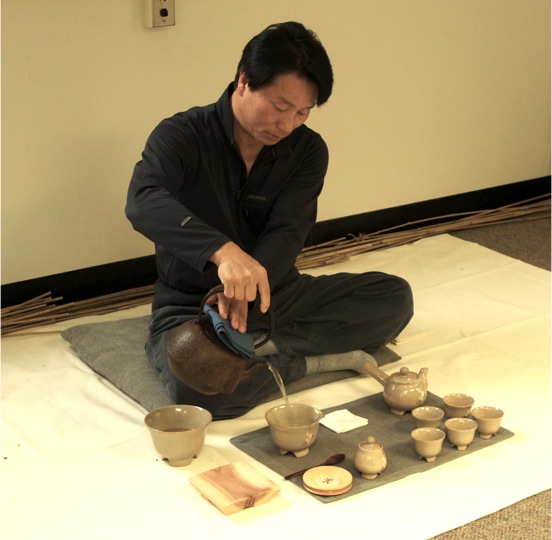
Master Hyo-am conducting the master class in the art of Korean tea
Hong Kyeong-Hee prepared the caked tea before a curious and expectant audience. Known by his tea name Master Hyo-am, Mr. Hong teaches tea at Inje University and the Panyaro Institute for the Way of Tea. During the Exhibition, he performed steeped and whisked tea ceremonies as well as taught master classes to members of the Institute. For several years now, Master Hyo-am has lived on Mount Jiri, South Jeolla province, preserving the tradition of making, preparing, and serving tea. Anticipating his visit to the Institute, he packed and brought with him a number of tea cakes, tteok-cha that he had made in May 2011 from leaves of wild tea grown on the mountain slopes near his home. Continue Reading →
Report on the 2012 Korean Tea Exhibition at Penn State
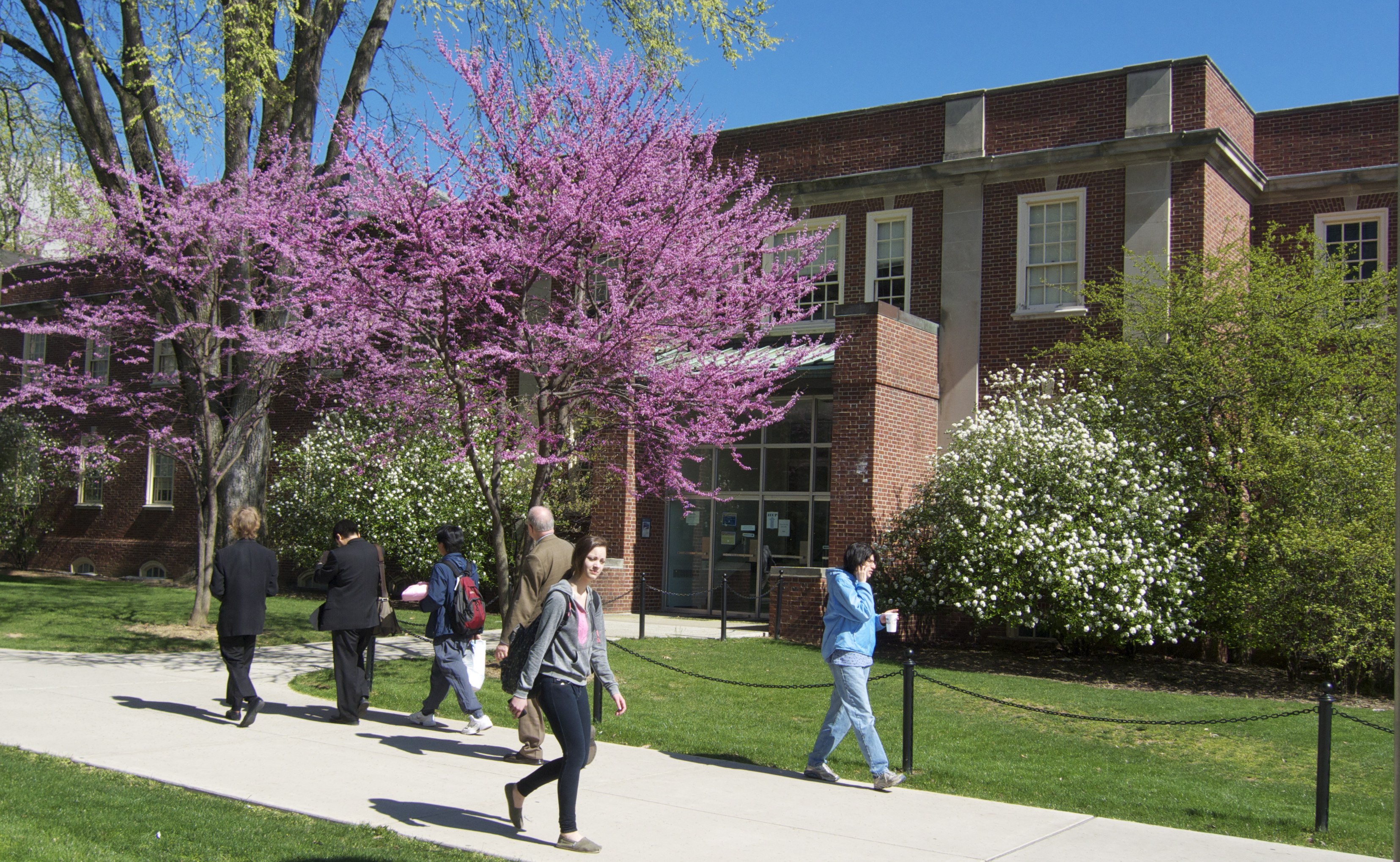
Ritenour Building
The Tea Institute of Pennsylvania State University recently hosted an extraordinary gathering devoted to the art of Korean tea. In a series of events held in early April 2012, the Institute presented a comprehensive program on the history, culture, practice, and music of tea. Specialists were invited from Korea and America to present lectures and demonstrations as well as to conduct master classes. Fine tea, exquisite performances, and the latest scholarship were offered over four days. The events drew an enthusiastic crowd from the students and faculty at The Pennsylvania State University, the community of the town of State College, and the public at large. Continue Reading →
Discourse on the Selflessness of the Superior Man

Hulu jushi fanyi
Xi Kang of the Wei Dynasty
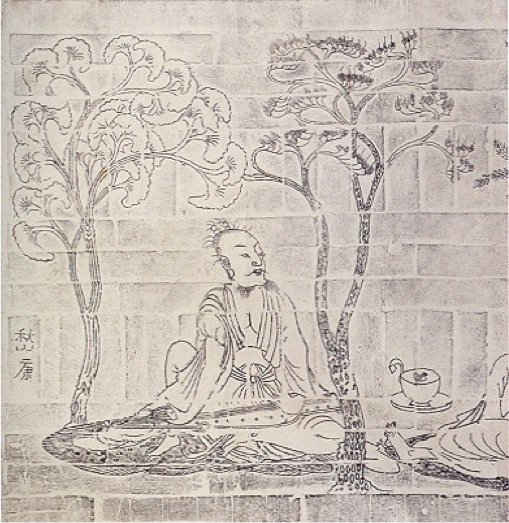
Discourse on the Selflessness of the Superior Man
The heart of the Superior Man is indifferent to right and wrong, yet his conduct does not stray from the Dao. Why is this? When the vital essence is still and the mind is empty, the heart is devoid of conceit. In a person of natural quality and spiritual accomplishment, his inner being is detached from worldly desire. Devoid of conceit, the heart is able to transcend moral doctrine and trust its own nature. When the inner being is detached from worldly desire, high and low are judged impartially and the nature of things is understood. When the nature of things is fully realized, then the Great Dao is inviolate and whole. When moral doctrine is transcended and the heart is untrammeled, then right and wrong are irrelevant. Thus, it is said that the Superior Man embraces detachment and praises the understanding of things…
Empty minded and indifferent: this is the way of the Superior Man. Thus, it was said [in the book] of the Great Dao, “When I have no body, I have no concerns.” Those who reject worldly matters are worthy of esteem. From this perspective, the heart of the accomplished adept thus harbors no attachments. So it was said, “the path of the Superior Man is to relinquish the body.” Indeed, this is true. The way of the Superior Man is virtuous. He does not ruminate over rules of conduct and then act. Intuitively, he trusts his heart and does not dwell on the approved or the proper. True being is selflessly disinterested, regardless of appropriateness or consequence. This is to freely abandon regard and concern for social convention. By spontaneously trusting the heart, the heart and courtesy are one. When there is indifference, all things are equal. Continue Reading →
Immortal’s Palm Tea: Preface and Poem
壺蘆居士繙譯
Immortal’s Palm Tea: Preface and Poem*
Li Bo (701-762 A.D.) of the Tang dynasty
I have heard of Jade Spring Temple near the clear streams and serried hills of Jingzhou, where all the mountain grottos possess stalactite caves, where the many tributaries of Jade Stream mingle, where the white bats are as big as crows. According to the Book of Immortals, bats were known as celestial mice. After a thousand years, their bodies turned white as snow. When perched, they hung upside down. Drinking the stalactite waters, they were long-lived. Everywhere along the stream, there is tea with stems and leaves like blue-green jade. Only Master Zhen of the Jade Spring Temple used to pick the tea to drink. He was over eighty with a complexion like peaches and plums. This tea is pure in fragrance and mellow in taste, different from other teas. Thus, it restores youth and reverses decay, enhancing longevity. While in Jinling, I saw my nephew Zhongfu who showed me several tens of tea leaves, all curled and layered, shaped like hands, and bearing the name Immortal’s Palm Tea. It is newly produced from the hills of Jade Spring Temple: nothing like it has ever been seen before. Since Zhongfu presented me with this tea and a poem, he wishes me to respond. Therefore, I have written this introduction. Hereafter, the eminent monks and great recluses will all know that Immortal’s Palm Tea began with the Zen master Zhongfu and the Buddhist layman Green Lotus, Li Bo.
Ever have I heard of Mount Jade Spring,
Of its mountain grottos filled with stalactite caves
And immortal bats as big as white crows,
All hanging down above the clear, moonlit stream.
Tea grows among the rocks
And along Jade Spring’s ceaseless flow.
Root and stem exude a rich fragrance;
One whiff nurtures flesh and bone.
Lush and voluminous, the green leaves;
Branch upon branch, row upon row.
The sun dries Immortal’s Palm,
Coddling it like Hong Ya’s shoulder.
The world has never seen the like,
But who will spread its name?
Nephew Ying, the Zen master
Presents this tea and a beautiful poem;
Both are bright mirrors embellishing ugly Wuyan,
But I am shamed by the beauty Xizi.
Even so, this morning I joyfully
Sing this song to the Heavens.

Portrait of Li Bo
唐李白
答族侄僧中孚贈玉泉仙人掌茶並序
余聞荊州玉泉寺近清溪諸山,山洞往往有乳窟,窟中多玉泉交流,其中有白蝙蝠,大如鴉。按《仙經》,蝙蝠一名仙鼠,千歲之后,體白如雪,棲則倒懸,蓋飲乳水而長生也。其水邊處處有茗草羅生,枝葉如碧玉。惟玉泉真公常採而飲之,年八十余歲,顏色如桃李。而此茗清香滑熟,異於他者,所以能還童振枯,扶人壽也。余游金陵,見宗僧中孚,示余茶數十片,拳然重疊,其狀如手,號為“仙人掌茶”。蓋新出乎玉泉之山,曠古未覿。因持之見遺,兼贈詩,要余答之,遂有此作。后之高僧大隱,知仙人掌茶發乎中孚禪子及青蓮居士李白也。
常聞玉泉山
山洞多乳窟
仙鼠如白鴉
倒懸清溪月
茗生此中石
玉泉流不歇
根柯灑芳津
採服潤肌骨
叢老卷綠葉
枝枝相接連
曝成仙人掌
似拍洪崖肩
舉世未見之
其名定誰傳
宗英乃禪伯
投贈有佳篇
清鏡燭無鹽
顧慚西子妍
朝坐有餘興
長吟播諸天 Continue Reading →
The Sultaness Head
Thomas Garway and the Marketing of Tea in Seventeenth Century London
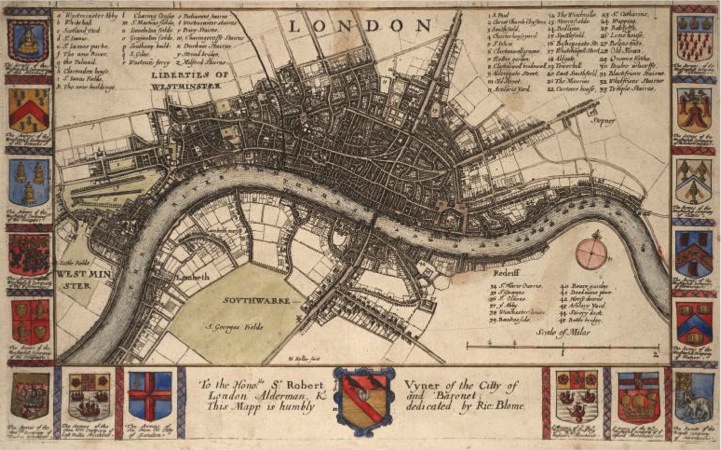
Map of the City of London, 1673
Introduction
In the history of English tea, the name Thomas Garway was intimately linked with two London coffee houses. The first was the Sultaness Head in Sweetings Rents, and the second, Garraway’s Coffee House in Exchange Alley. The historical treatment of Thomas Garway and his relationship to the Sultaness Head was uneven, and some early writings did not even associate the man with the place. More recent scholarship, principally that of Markman Ellis of the University of London, shows that the proprietor of the Sultaness head was indeed Thomas Garway, the first to offer tea to the English public. The account of Garway is an intriguing tale of tea, one immensely rich in detail and replete with unexpected twists and turns.
Contrary to modern notions, Garway was no aproned shopkeeper but in fact the scion of a great mercantile house, a guildsman, and above all an entrepreneur. Similarly, the Sultaness Head was not merely a coffee house but instead a satellite of commerce and finance in close orbit to the Royal Exchange and the goldsmith banks. Straddling the turbulent periods of the Interregnum and the Restoration, Thomas Garway and the Sultaness Head appeared and prospered in a time of astonishing fortune and extraordinary calamity. Continue Reading →
No Harm in Tea
Tea received mixed reviews in seventeenth century Europe. Touted by herbalists and healers as a miraculous cure for nearly every ailment, tea contended with the strong and formidable opposition of medical conservatives throughout the Continent. According to the German doctor Simon Pauli and the French physician Guy Patin, its fiercest critics, tea was the bane of medicines, hastening death to all who partook. But tea had vocal advocates, staunch allies who rallied in print and practice, putting up a stiff defense of the brew to the benefit of general health, commerce, and sometimes personal gain.
In Rome, the German Jesuit Athanasius Kircher had heard of tea but did not at first believe in its medicinal efficacy. On drinking tea, Kircher was astonished and amended his opinion to become a champion of the leaf:
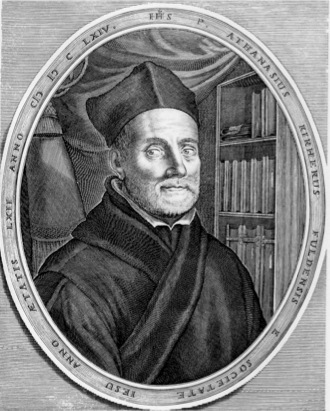
Athanasius Kircher
“It is a plant of great virtue, the likes of which, if I had not experienced it myself upon the invitation of some Fathers of our order, I would never have been led to credit, for joined to its diuretic faculty, it wonderfully relaxes every blockage of the kidneys and dissipates the heaviness of the head, so that literary men, or others who are compelled by the magnitude of their labors to stay up late at night, find no more noble or fitting remedy in all of nature, and although at first its taste is watery and somewhat bitter, in time it not only loses its unpleasantness, but soothes so well the itchings of the throat, that those who have taken up this drink find it hard to do without.”
Kircher went on to compose one of the most influential books on China. Published in 1667, China Illustrata was an encyclopedic work that included natural history and the mention of the tea plant:
“There is the plant called Cha, which not being able to contain itself within the bounds of China, hath insinuated itself into Europe: it aboundeth in divers regions of China, and there is great difference, but the best and most choice is in the Province Kingnan [sic], in the territory of the city Hocicheu [sic]. The leaf being boiled and infused in water, they drink it hot as often as they please: it is of a diuretic faculty, much fortifies the stomach, exhilarates the spirits, and wonderfully openeth all the nephritick passages or reins; it freeth the head by suppressing of fuliginous vapours, so that it is a most excellent drink for studious and sedentary persons, to quicken them in their operations; and though, at the first, it seemeth insipid and bitter, yet custom maketh it pleasant; and though the Turkish coffee administer the like cordiality, and the Mexican chocolate be another excellent drink, yet tea, if the best, very much excelleth them both, because, that chocolate in hot seasons inflameth more than ordinary, and coffee agitateth choler; but tea in all seasons hath one and the same effect.”[1] Continue Reading →
Happy for the Arrival of Lu Yü
壺蘆居士繙譯
Li Ye (713-784 A.D.) of the Tang dynasty
Lying Ill above the Lake, Happy for the Arrival of Lu Yü
Parting many wintry moons ago,
You now come in bitter spring mists,
Happening upon me still sick abed:
I yearn to speak, but first my tears fall.
Compelled by Tao Qian’s wine,
I hastily chant a poem by Xie Lingyün.
All of a sudden, I’m perfectly intoxicated…
More than this, is there anything else? Continue Reading →