
Lu Yu’s Names
眠雲臥石
The Tang dynasty tea master Lu Yu 陸羽 (ca. 733-804 ca.) was known in his lifetime and throughout history by many names. The following appellations provide just some of the names by which he was known during his lifetime and by later writers.
Childhood names
Ji 疾, Malady, Blotchy, Deformity
Jici 季疵, Little Blemish
Surname and given names
Lu Yu 陸羽
Lu Ji 陸季
Lu Ji 陸疾
Surname and courtesy names
Lu Hongjian 陸鴻漸
Lu Jici 陸季疵
Lu Jibi 陸季庇
Aliases
Jingling zi 竟陵子, Master Jingling
Donggang zi 東崗子, Master East Ridge
Sangzhu weng 桑苧翁, Elder Mulberry and Nettle
Dongyuan zi 東園子, Master East Garden
Sobriquets
Lu san 陸三, Lu, The Third
Lu san shanren 陸三山人, Recluse Lu, The Third
Lu sheng 陸生, Sire Lu
Lu chushi 陸處士, Recluse Lu
Lu jushi 陸居士, Layman Lu
Lu Hongjian shanren 陸鴻漸山人, Recluse Lu Hongjian
Churen 楚人, Man of Chu
Chashan yushi 茶山御史, Tea Mountain Scribe
Dongyuan xiansheng 東園先生, Master East Garden
Honorifics
Lu Wenxue 陸文學, Imperial Instructor Lu
Lu Taizhu 陸太祝, Great Invocator Lu
Chadian 茶顛, Foremost Tea Master
Chasheng 茶聖, Tea Sage
Chaxian 茶仙, Tea Immortal
Chashen 茶神, Divinity of Tea
Tea in the Warring States Period

眠雲臥石
Tea was recently excavated from a royal tomb dating over 2,400 years ago to the late Zhou dynasty (1046-256 B.C.E.) and the period known as the Warring States (475-221 B.C.E.). The discovery was made in Shandong at Zoucheng, the capital of the ancient State of Zhu (11th-5th centuries B.C.E.). The archaeological find confirmed the early use of tea as a funerary offering to the dead and indicated its custom among the living. The archaeological context revealed not only the use of tea but also the likely source of the leaf. Moreover, the use of tea at so northerly a location advanced the geographical range of tea as an item of trade or tribute from tea producing regions south of the Yangzi.
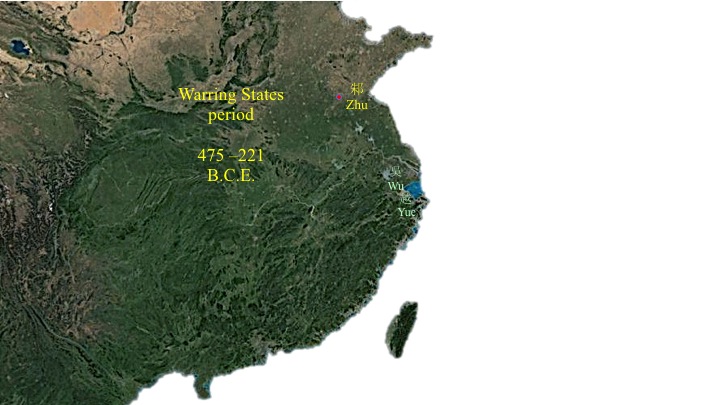
In the eleventh century, during the inaugural years of the Zhou dynasty, the minor State of Zhu was created a vassal and tributary of the major State of Lu. Initially, the ruler of Zhu was ennobled viscount, a hereditary rank, and the state was established just southeast of Qufu, the capital of the State of Lu. Throughout its history, the State of Zhu was harried by its more powerful neighbors and was often forced to move its capital. In the ninth century, the Zhu territory and ruling house were divided to weaken the state. During the Spring and Autumn period, the State of Zhu regained strength. In 659, however, the bordering State of Lu defeated the State of Zhu in battle. In 643, the twelfth ruler of Zhu moved the capital farther southwest to Zoucheng. Over the centuries, nineteen Zhu sovereigns survived the political and military aggression of larger, neighboring states until the State of Zhu and its regnant family were destroyed in the later fifth century.
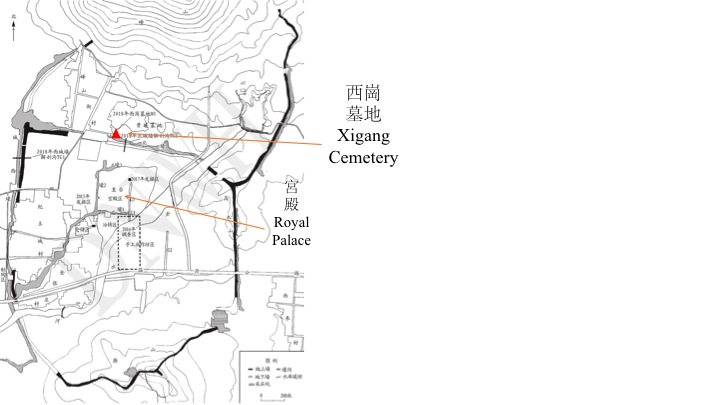
The capital city Zoucheng was strategically sited on the Jinshui River that flowed east to west through the flat, open plain between Mount Yi in the north and Mount Guo in the south. The precinct of the royal palace occupied the north-central axis of the city and was surrounded by a defensive trench and high walls of rammed earth. North of the palace and just beyond the protective ditch lay Xigang, the royal cemetery of the State of Zhu.
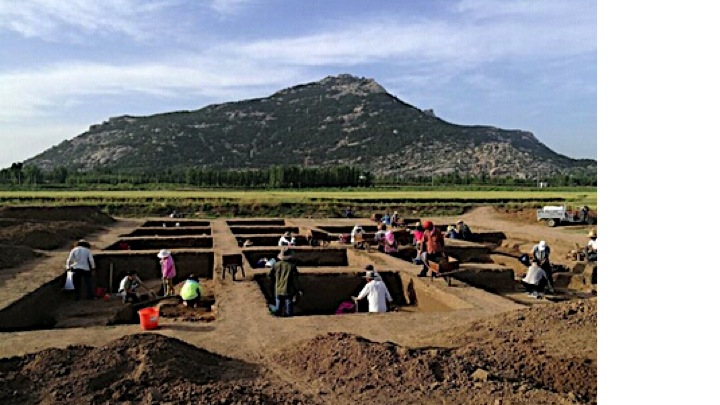
In 2018, excavations at Xigang revealed the graves of a Zhu monarch and his queen. Located side by side, each of the tombs was a deep pit constructed of rammed earth in the shape of a square with a wide entry ramp. The tomb of the queen, which was excavated first and designated Tomb M1, was found to have been repeatedly looted by thieves long ago. However, a number of remaining artifacts were discovered, including a pair of jade pendants, a small ring of jade, remnants of gilt and lacquer ware, and a cache of ceramics.
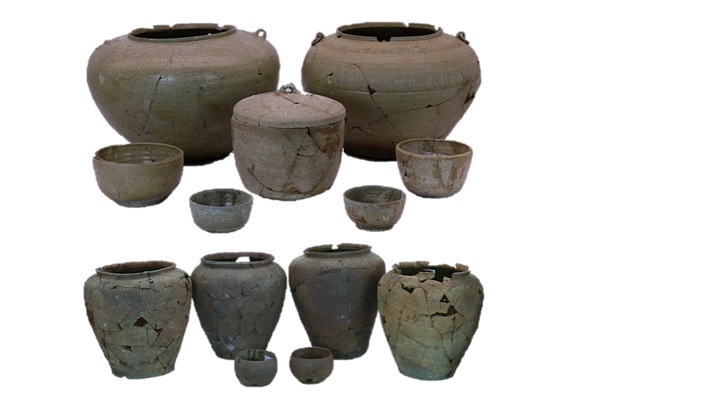
The store of pottery was uncovered on a narrow ledge cut into the south wall of the tomb above the floor of the grave. The earthenware and stoneware pottery were originally placed in a wooden chest that had since rotted away, leaving vessels – jars, large bowls, small cups, a lidded urn – and sherds in a jumble. Also on the ledge, two small stoneware bowls were found overturned, their interiors filled with soil. The earth of one of the bowls contained a dark plant material that was unidentified at the time of excavation but was retained for subsequent examination and testing.
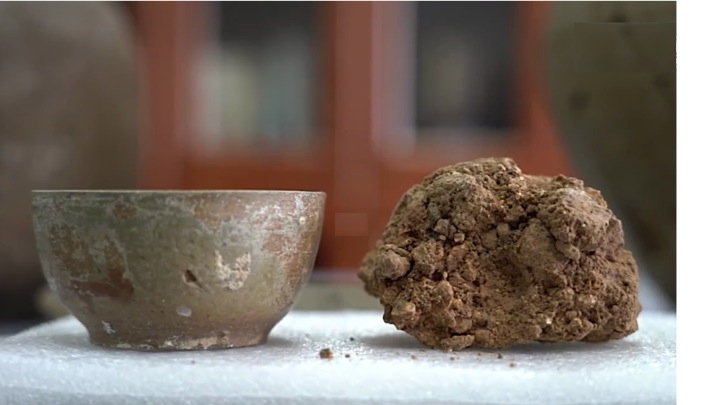
In the past, tea remains from archaeological digs were identified by botanical morphology, the form and structure of the plant. Although the vegetal matter found at Xigang was rotted and blackened as to be unidentifiable by visual means, samples were later subjected to a battery of tests that found the cellular structure of the plant and the abundance of calcium salt crystals matched the genus Camellia. Likewise, the presence of caffeine and theanine identified the plant material as tea.
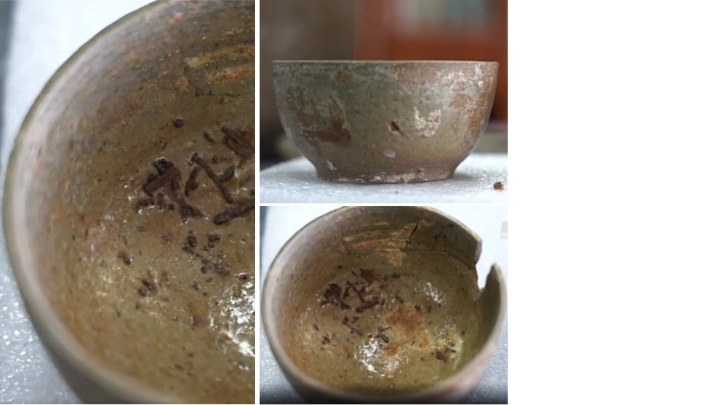
The remains of tea at Zoucheng were in a small bowl, one of two bowls of similar shape, size, and color that were discovered on the aforementioned ledge above the grave. The two bowls were reported as proto-porcelains, a ceramic type more accurately described as a high-fired porcelaneous stoneware with a greenish feldspathic iron glaze. On the basis of body, glaze, and style, the bowls and the other green-glazed stoneware in the cache were identified as Yue ware, imports from the distant pottery kilns of the southern states of Wu and Yue in Jiangsu and Zhejiang, the only fifth century sources of such early celadons.
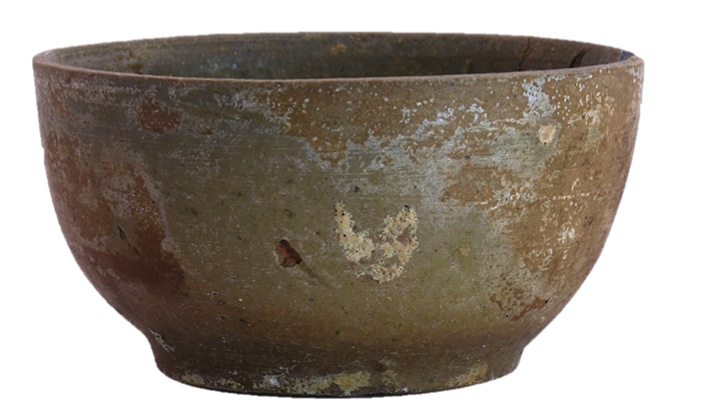
As suggested by the Yue ware and its southern sources, the tea gardens of Jiangsu and Zhejiang were also the likely provenance of the leaves in the bowl. Aligned geographically along the eastern seaboard and latticed with transport waterways, the lower reaches of Shandong and the upper stretches of Jiangsu and Zhejiang exchanged tea and ceramics through trade or tribute. Located just south of Zhu, Wu and Yue were nearer sources of tea than the distant tea producing regions of the State of Chu or Sichuan.
It is also noteworthy that nearly all of the ceramics found in Zoucheng Tomb M1 were coupled with vessels of a similar size and shape: two large jars, two pairs of smaller jars, two large bowls, two small bowls, and two small cups; the only exception to pairing was the single lidded urn. Also, the two small bowls appeared distinct from the cache of ceramics by their location, association, and contents. Whereas the other potteries were empty and stored as a group in the wooden case, the two bowls were found separate from the rest, close together, and out on the ledge. Notably, the one bowl contained tea, a comestible that in the context of ritual burial customarily signified ceremonial sacrifice by the living to the dead.
The discoveries in Shandong document not only the earliest evidence to date for the use of tea during historical times but also the earliest use of tea as a funerary offering. Prior to the archaeological finds at Zoucheng, the earliest tea as sacrifice was dated to the second century B.C.E. and excavated from Han Yangling, the mausoleum of the Han emperor Jingdi at Xi’an nearly five hundred miles away to the west in Shaanxi.
Significantly, the concurrence of tea and Yue ware at Zoucheng marked the beginnings of the ancient and enduring tradition that intimately connected the art of tea with the use of celadon, a practice promoted by the Tang tea master Lu Yu in the Book of Tea in which he famously compared the white wares of Xing to the celadons of Yue:
There are those who judge bowls from Xing superior to ones from Yue. This is certainly not so. If Xing is like silver, then Yue is like jade. This is the first way in which Xing cannot compare to Yue. If Xing is like snow, then Yue is like ice. This is the second way in which Xing cannot compare to Yue. Xing ware is white, and thus the color of liquid tea in the bowl looks reddish. Yue ware is celadon, and thus the color of tea appears greenish. This is the third way in which Xing cannot compare to Yue.
References
Lu Guoquan 路國權 et al., “Shandong Zoucheng shi Zhuguo gucheng yizhi 2015 nian fajue jianbao 山東鄒城市邾國故城遺址2015年發掘簡報 (Brief Report on the 2015 Excavation of the Ruins of the Ancient Capital of the State of Zhu, Shandong),” Kaogu 考古 (Archaeology) (2018), no. 3, pp. 44-67.
Ma Fangqing 馬方青 et al., “Shandong Zoucheng Zhuguo gucheng yizhi 2021 nian fajue chutu zhiwu da yicun fenxi — jiyi gudai chengshi guanli shijiaozhong de ren yu zhiwu 山東鄒城邾國故城遺址2015年發掘 — 出土植物大遺存分析 (Plant Macro Remains Excavated from the Ancient Capital City Site of the State of Zhu in Zoucheng, Shandong Province in 2015: Humans and Plants in the Perspective of Ancient Urban Management),” Kaogu tansuo 考古探索 (Archaeology Discovery) (4 March 2019), pp. 57–69. Accessed 26 January 2022. (https://www.researchgate.net/publication/333973022).
Wang Qing 王青et al., “Shandong Zoucheng Zhuguo gucheng yizhi 2015–2018 nian tianye kaogu de zhuyao shouhuo 山東鄒城邾國故城遺址 2015–2018 年 田野考古的主要收獲 (The Primary Findings from the Field Archaeology at the Ruins of the Ancient Capital of the State of Zhu in Zoucheng, Shandong),” Tongnan wenhua 東南文化 (Southeast Culture) (2019), vol. 3, no. 269, pp. 18–24, pls. 1–3.
Jiang Jianrong et al., “The Analysis and Identification of Charred Suspected Tea Remains Unearthed from Warring State Period Tomb,” Scientific Reports (August, 2021), no 11. Accessed 26 January 2022. (https://www.researchgate.net/publication/353929508).
Lu Guoquan 路國權 et al., “Shandong Zoucheng Zhuguo gucheng Xigang mudi yihao Zhanguo mu chaye yicun fenxi 山東鄒城邾國故城西崗墓地一號戰國墓茶葉遺存分析 (Analysis of Tea Leaf Remains of Number 1 Warring States Tomb at Xigang Cemetery, the Ancient Capital of the State of Zhu, Zoucheng, Shandong), Kaogu yu wenwu 考古與文物 (Archaeology and Cultural Relics)( September, 2021), no. 5, pp. 118-122.
Lament at the Stupa of Jiaoran and the Tomb of Lu Yu
眠雲臥石
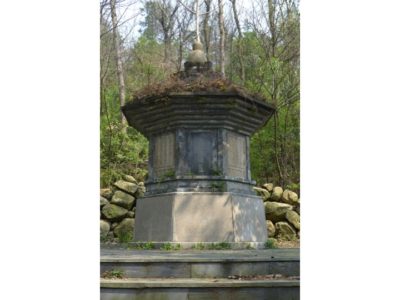
Stupa dedicated to Jiaoran
Meng Jiao of the Tang dynasty
Accompanying Lu Cheng Back to Huzhou, I Composed a Lament to the Dead at the Stupa of Jiaoran and the Tomb of Lu Yu
Pouring rain before the temple,
Pale waterclover gathers in the freshening wind.
Past poetry filled with friendship,
Now my poems, empty.
The lonely moan of the jade flute, doleful,
Distant thoughts, the vista – lush.
Here, the brick stupa of the Zen Master of Mount Zhu.
Here, the Jingling Elder of the Endless Night.
The sound of grasses and trees, profuse
As if filled with a sense of wisdom
By you and all your verses,
Abundant and amassed.
Pursuing poetry, you once said,
Of verse, there truly was no lack.
Yet a river’s song is hard to repeat
And the dust of the capital fills only the body.
Sending you astream, two mandarins,
Colors paired, flying east.
High and serene, the Eastern Realm,
Beautiful abode, cold and sublime.
My hands gather your treasured works,
Offerings that foster joy and full harmony.
Embracing them gratefully at the end,
Not at the pavilion on the banks of the Luo
But at Death, the Great Unity.
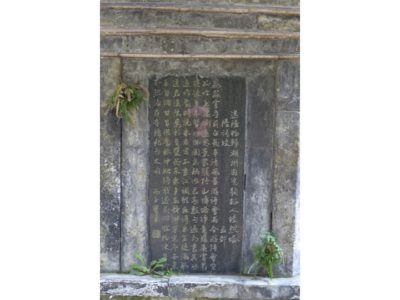
Meng Jiao poem inset in the stupa dedicated to Jiaoran
唐 孟郊
送陸暢歸湖州因憑吊故人皎然塔陸羽墳
淼淼霅寺前 白蘋多清風
昔游詩會滿 今游詩會空
孤吟玉淒惻 遠思景蒙籠
杼山磚塔禪 竟陵廣宵翁
饒彼草木聲 仿佛聞餘聰
因君寄數句 遍為書其叢
追吟當時說 來者實不窮
江調難再得 京塵徒滿躬
送君溪鴛鴦 彩色雙飛東
東多高靜鄉 芳宅冬亦崇
手自擷甘旨 供養歡沖融
待我遂前心 收拾使有終
不然洛岸亭 歸死為大同
全唐詩 juan 379, p. 8b.
The Censor’s Jar
An unusual account of tea was once written by a high court official during the eighth century. The report described the tea used in the offices of the Censorate, one the most powerful and feared agencies of the Tang imperial government.
The Censor’s Jar —The Censorate is comprised of three Bureaus: Headquarters Bureau, its personnel are called Attendant Censors; Palace Bureau, its personnel are called Palace Censors; and Investigation Bureau, its personnel are called Investigation Censors. The Investigation Bureau is located to the south. At the beginning of the Huichang reign period, the Investigation Bureau was renovated by the Investigating Censor Zheng Lu. The Investigation Hall of the Ministry of Rites is called the Hall of Pines, for to its south there are ancient pines. The Investigation Hall of the Ministry of Justice is called the Hall of Nightmares, for being held there causes many bad dreams. The Investigation Hall of the Ministry of War is responsible for the tea for the Bureaus. The tea must be the finest from the markets of Shu. It is stored in a ceramic vessel to protect it from heat and moisture. A censor personally oversees its care. Therefore, it is called the Censor’s Tea Jar.
御史瓶. 御史三院. 一曰臺院. 其僚曰侍御史. 二曰殿院. 其僚曰殿中侍御史. 三曰察院. 其僚曰監察御史. 察院㕔居南. 㑹昌初. 監察御史鄭路所葺. 禮祭廳謂之松廳. 南有古松也. 刑察廳謂之魘廳. 寢於此多魘. 兵察廳常主院中茶. 茶必市蜀之佳者. 貯於陶噐. 以防暑濕. 御史躬親監啟. 故謂之御史茶瓶.
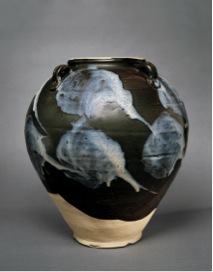
New York
The Yushi ping 御史瓶 or Censor’s Jar was an entry in Record of the Censorate, a twelve-volume work that described the Tang imperial investigative organization known as the Censorate. The study was written by Han Wan 韓琬 (active 710–741), a Palace Censor who revealed the inner workings of the Censorate through nearly a century of its history. A direct witness to the inner workings of the agency, Han Wan detailed the matters of the Bureau through its registers, records, and biographies, including the establishment of the intelligence service, its sources and development, and its handling of official affairs and conduct.
According to Han Wan, tea was so essential to the daily operations of the Censorate that a ministry office was charged with its procurement and no less a senior officer than an imperial censor was charged with managing its storage. The quality of the tea was described as necessarily the best leaf from Shu, its most ancient source in Sichuan. Such was the importance of tea that its very repository was named yushi chaping 御史茶瓶, the Censor’s Tea Jar.
Han Wan was a native of Nanyang, Dengzhou in present Henan. While it was unclear from his Record as to whether or not he was a tea drinker, Han Wan appreciated the herb and its use by the Censorate to make exceptional note of it in his historical account. Moreover, subsequent records such as the Record of Things Heard and Seen testify to the informed interest in tea by later members of the Censorate, including the agency leaders Vice Censor-in-Chief Feng Yan 封演 (js 756) and the Censor-in-Chief Li Jiqing 李季卿 (709–767). Han Wan’s record of the Censor’s Jar was but one of a number of expressions of the utility and esteem of tea among the highest eschelons of the Tang imperial administration, especially northern elites.
Figure
A Large Blue-Splashed Brown-Glazed Stoneware Jar
Tang Dynasty, 8th – 9th Century
Height 16 inches (40.6 cm.)
J. J. Lally & Company
Oriental Art
New York, New York
Notes
Huichang 㑹昌 reign period (841–847).
Zheng Lu: 鄭路 (active ca. 841–847), an Erudite of the Court of Imperial Sacrifices and an Investigating Censor.
Record of the Censorate: Yushi taiji 御史臺記, after 741.
Record of Things Heard and Seen: Fengshi wenjian ji 封氏聞見記, ca. 772.
Sources
Tang yulin 唐語林 (Forest of Discussions of the Tang). Wang Dang 王讜 (active 1089), juan 8, pp. 7a-7b. SKQS.
Yinhua lu因話錄 (Tales of Retribution, 9th century). Compiled by Zhao Lin趙璘 (js 834), juan 5, p. 4b. SKQS.
Yuding yuanjian leihan 御定淵鑑類函 (The Categorized Caseworks of the Yuanjian Studio by Imperial Commission, 1710). Compiled by Zhang Ying張英 (js 1667, 1637-1708), juan 395, pp. 11b-12a. SKQS.
Zhongguo chaye lishi ziliao xuanji 中國茶葉歷史資料選輯 (A Compilation of Historical Materials on Chinese Tea). Compiled by Chen Zugui 陳祖槼 and Zhu Zizhen 朱自振, p. 210. Beijing: Nongye chuban she, 1981.
Poem
Wang Fuli of the Qing Dynasty
Poem
Dawn flower, evening moon
Worthy host, splendid guest
Speaking freely of past and present
Tasting tea, one after another…
Between Heaven and Earth, is there anything more enjoyable?
清 王復禮
花晨月夕
賢主嘉賔
縱談古今
品茶次苐
天壤間更有何樂
Notes
Wang Fuli 王復禮 (Wang Caotang 王草堂, ca. 1641-1720), from Hangzhou.
Source
Lu Tingcan
陸廷燦 (active ca. 1666/1678–1743), Xu Chajing 續茶經 (Sequal to the Book of Tea,
1734), juan 下之二,
p.18b. SKQS.
Discourse Between Tea and Wine
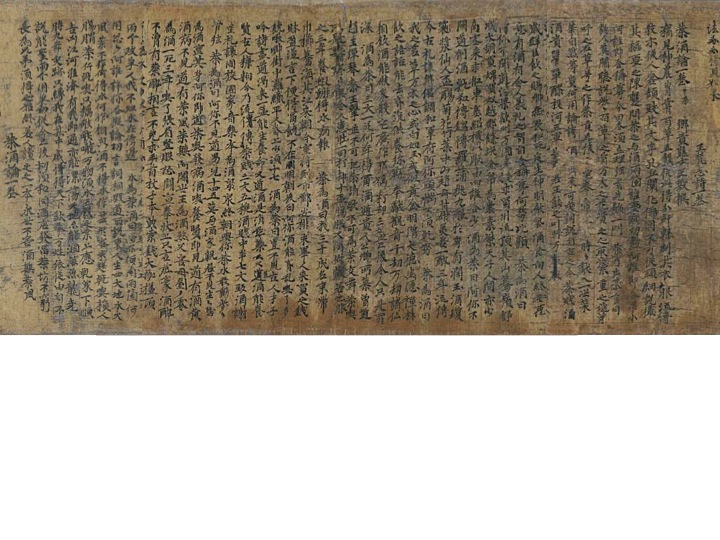
Discourse Between Tea and Wine,
ca. 742-760, one juan and
preface
by the Presented Prefectural Nominee, Wang Fu (ca. mid 8th century)
I dare say that Shennong the Divine Cultivator tasted the Hundred Plants, and thereafter the Five Grains were distinct; that Xuanyuan the Yellow Emperor created clothing and passed it down to instruct posterity; that Cang Jie created words; and that Confucius spread the Ru doctrines. At present, such things cannot present be spoken in depth, so I select only the essentials for discussion. Now, I ask Tea and Wine, who of the two has more virtue? Who is inferior? Who is superior? Today, each must form arguments, and the greater will lead in gaining glory for its side.”
Tea then comes forth saying, “Everyone, do not quibble, for it is said that I am the first of the Hundred Plants and the flower of the Ten Thousand Plants. The most precious part is sought from my pistils, the most important is chosen from my buds. I am called Mingcao; my sobriquet is Cha. I am sent as tribute to the households of the Five Marquises, and offered to the families of the Emperor and Princes. It is fashionable to gift me, engendering a lifetime of honor and glory. Naturally, I am the respected one. Why the need for debate and boasting!”
Wine then comes forth, “What silly words! Since antiquity till now, tea has been scorned while wine has been respected. Cast a bucket of wine lees in the river, and the Three Armies report in drunk. When lords and rulers drink wine, everyone shouts ‘longevity of ten-thousand years.’ When the assembled courtiers drink wine, all may speak without fear. I comfort the dead and calm the living, and even the divine are pleased by my fragrance. When wine and food are shared, evil intent is always absent. When there is wine, there is order: benevolence, righteousness, propriety, and wisdom. Naturally, I’m called superior. So why bother comparing!”
Tea says to Wine, “Ah, you have not heard: the Ten Thousand States come seeking the tea of Fuliang and Shezhou. For tea from mountains of Shu and Mengding, people scale the massif peaks. In Shucheng and Taihu, they procure maids and buy slaves. In Yuejun and Yuhang, tea is kept in pouches made of gold and silk. The tea Pale Purple Emperor is rare in the world. When tea merchants come bidding, their boats and carriages snarl in the traffic. According to this reasoning, who is inferior now?”
Wine says to Tea, “Well, you haven’t heard. Jijiu and Qianhe wines are traded for brocade and gauze. Grape and Jiuyun wines benefit the body. Jade and Qiongjiang wines fill the goblets of immortals. The wines Chrysanthemum Flower and Bamboo Leaf are passed among lords and princes. The Zhaomu wines of Zhongshan are sweet and pleasingly bitter. One cup inebriates a person for three years, so says a legend passed from antiquity till today. Wine inspires comity among the plebeian and pacifies the martial. So, there’s no need to worry your head.”
Tea says to Wine, “As Mingcao, I am the heart of the Ten Thousand Plants. I am as white as jade or like yellow gold. Famous monks of great virtue and hermits of Chan monasteries all drink me during discourse, for I drive away weariness. Tea is offered to Maitreya and dedicated to Avalokiteśvara. Spanning a thousand katalpas, ten thousand aeons, the Buddhas all venerate me. Wine can ruin families and scatter households and spread immorality and depravity. Drinking three cups of wine causes only greater iniquity.”
Wine says to Tea, “At just three coins a jar, when will tea ever make for wealth? Wine reaches the nobility and is admired by court officials. It once inspired the King of Zhao to pluck the zither and the King of Qin to strike musical ceramics. It is not permitted for tea to accompany singing nor is it allowed for tea to rouse dancing. To drink tea is only to get backaches, and drinking too much causes stomach pains. If ten cups a day are downed, the intestines swell like yamen drums. Taking tea for three years is to spur dropsy in a toad.”
Tea says to Wine, “Of my generation, I am celebrated, properly attired, girdled and groomed. Leaping oceans and riding rivers, I arrive at this golden court. In the marketplace, dealings are never certain. But people come to buy me, their money overflowing. Even as we speak, I easily attain wealth and riches, no waiting for tomorrow morning or the day after. Oh, Wine, you make people dull and confused. Drinking too much, they become garrulous. In the street, you ensnare them. You deserve at least seventeen lashes!”
Wine says to Tea, “Don’t you know about the talented men of antiquity, who chanted poetry and said, ‘When thirsty, drink a cup of wine to rejuvenate and nurture life.’ And,‘Wine is the medicine that purges all worries.’ Or, ‘Wine can cultivate virtue.’ These sayings from the ancients have passed down till today. Tea is cheap, three coins for five bowls; and while wine is also cheap, it still costs seven coins for just half a cup. Serving wine and formal seating are ceremonies for guests. Ritual state music flows from the fountain of wine. But drink tea when court is ended and none dare tweet or strum even a bit.”
Tea says to Wine, “So, you do not believe that youths of fourteen or fifteen should not visit wine shops. You do not think that the shengsheng bird lost its life because of wine. You said, ‘Tea drinking tea causes disease and drinking wine cultivates virtue.’ But although I have seen jaundice and disease due to wine, I have never seen madness or insanity from tea. Because of wine, King Ajātaśatru killed his father and distressed his mother, and Liu Ling died in three years. Having drunk wine, the brows arch, the eyes bulge, angry fights start, and fisticuffs declared. Rough paladins are accused of drunkenness, but that can never be said of tea. Inescapably, the drunkard is arrested and imprisoned, the law fines him, a great cangue put round his neck, and his back beaten. To abstain from wine, he will burn incense, cry to Buddha, and beseech Heaven. For the rest of his days, he will not drink, hoping to avoid faltering on the path to sobriety.” Tea and Wine vie to distinguish one from the other, unaware that Water is right next to them.”
Water says to Tea, “The two of you, why so vehement! Who are you to argue about virtues? Speaking so, you ruin one another with nonsense. In life, there are four essential elements: Earth, Water, Fire and Wind. Tea without water, how does that look? Wine without water, how does that appear? Rice and leavening eaten dry injures the intestines and stomach. Caked tea swallowed dry scrapes and wounds the throat. All living things need water, the source of the Five Grains. From above, I respond to celestial signs; from below, I follow the auspicious and dreadful. By me, the rivers Yangzi, Yellow, Huai, and Ji all flow. I can inundate Heaven and Earth. I can wither and kill the fishes and dragons. In the age of Yao, the Nine Years of Floods were caused by me. I am worshipped by All Under Heaven, and the Ten Thousand Clans obey me. While I am no saint, why do you two argue your merits? From now on, be in harmony, so that wineshops prosper and teahouses are not impoverished. Be everlasting brothers, from beginning to end. When people read this, generations for eternity will never suffer madness from wine nor insanity from tea.”
Discourse Between Tea and Wine, one juan.
A manuscript written by Yan Haizhen, disciple of the Zhishu Monastery, on
the fourteenth day of the first lunar month of the third year of the Kaibao
reign period, 970.
茶酒論一卷並序
鄉貢進士王敷撰
竊見神農曾嘗百草, 五穀從此得分, 軒轅製其衣服, 流傳教示後人; 倉頡致其文字, 孔丘闡化儒因. 不可從頭細説, 撮其樞要之陳. 暫問茶之與酒, 兩個誰有功勛? 阿誰即合卑小, 阿誰即合稱尊? 今日各須立理, 強者光飾一門.
茶乃出來言曰: 諸人莫閙, 聼說些些, 百草之首, 萬木之花. 貴之取蘂, 重 之摘芽. 呼之茗草, 號之作茶. 貢五侯宅, 奉帝王家. 時新獻入, 一世榮華. 自然 尊貴, 何用論誇!
酒乃出來: 可笑詞說! 自古至今, 茶賤酒貴. 單醪投河, 三軍告醉. 君王飲之, 叫呼萬歲. 群臣飲之, 賜卿無畏. 和死定生, 神明歆氣. 酒食向人, 終無惡意. 有酒有令, 仁義禮智. 自合稱尊, 何勞比類.
茶為酒曰: 阿你不聞道: 浮梁歙州, 萬國來求. 蜀山蒙頂, 其山驀嶺. 舒城, 太湖, 買婢買奴.越郡, 餘杭, 金帛為囊. 素紫天子, 人間亦少. 商客來求, 船車塞紹. 據此蹤由, 阿誰合小?
酒為茶曰: 阿你不聞道. 齊酒, 乾和, 博錦, 博羅. 蒲桃, 九醖, 於身有潤. 玉酒, 瓊漿, 仙人盃觴. 菊花, 竹葉, 君王交接. 中山趙母, 甘甜美苦. 一醉三 年, 流傳今古. 禮讓鄉閭, 調和軍府. 阿你頭腦, 不須乾努.
茶為酒曰: 我之茗草, 萬木之心. 或白如玉, 或似黃金. 名僧大德, 幽隱禪林. 飲之語話, 能去昏沉. 供養彌勒, 奉獻觀音. 千劫萬劫, 諸佛相欽. 酒能破家 散宅, 廣作邪淫. 打卻三盞已后, 令人只是罪深.
酒為茶曰: 三文一瓨, 何年得富? 酒通貴人, 公卿所慕. 曾遣趙王彈琴, 秦王擊缶. 不可把茶請歌, 不可為茶教舞. 茶喫只是腰疼, 多喫令人患肚. 一日打却 十盃, 腹脹又同衙鼓. 若也服之三年, 養蛤蟆得水病報.
茶為酒曰: 我三十成名, 束帶巾櫛. 驀海騎江, 來朝金室. 將到市鄽, 安排未畢. 人來買之, 錢財盈溢. 言下便得富饒, 不在明朝後日. 阿你酒能昏亂, 喫了多 饒啾唧. 街中羅織平人, 脊上少須十七!
酒為茶曰: 豈不見古人才子, 吟詩盡道: 渴來一盞, 能生養命. 又道: 酒是消愁藥 . 又道: 酒能養賢. 古人糟粕, 今乃流傳. 茶賤三文五碗, 酒賤中半七文. 致酒謝坐. 禮讓周旋. 國家音樂, 本為酒泉. 終朝喫你茶水, 敢動些些管弦.
茶為酒曰: 阿你不見道: 男兒十四五, 莫與酒家親. 君不見猩猩鳥, 為酒喪 其身. 阿你即道: 茶喫發病, 酒喫養賢. 即見道有酒黃酒病, 不見道有茶瘋茶癲. 阿闍世王為酒殺父害母, 劉伶為酒一死三年. 喫了張眉竪眼, 怒鬥宣拳. 狀麤豪酒醉, 不曾有茶醉相言. 不免求首杖子, 本典索錢. 大枷搕項, 背上抛椽. 便即燒香斷酒, 念佛求天, 終生不喫, 望免迍邅. 兩個政爭人我, 不知水在傍邊。
水為謂茶曰: 阿你兩個, 何用怱怱! 阿誰許你, 各擬論功? 言詞相毀, 道西說東. 人生四大, 地水火風. 茶不得水, 作何相貌? 酒不得水, 作甚形容? 米麯乾喫, 損人腸胃. 茶片乾喫, 只糲破喉嚨. 萬物須水, 五穀之宗. 上應乾象, 下順吉凶. 江河淮濟, 有我即通. 亦能漂蕩天地, 亦能凅殺魚龍. 堯時九年災跡, 只緣我在其中. 感得天下欽奉, 萬姓依從. 由自不說能聖, 兩個用爭功? 從今以後, 切須和同. 酒店發富, 茶坊不窮. 長為兄弟, 須得始終. 若人讀之一本, 永世不害酒癲茶瘋.
茶酒論一卷
開寶三年庚午歲正月十四日知術院弟子閻海真自手書記
Bibliography
Benn, James A. “Buddhism, Alcohol, and Tea in Medieval China.” Of Tripod and Palate: Food, Politics, and Religion in Traditional China. Edited by Roel Sterckx, pp. 213-236. New York: Palgrave Macmillan, 2005.
Cha jiu lun 茶酒論 (Discourse Between Tea and Wine, ca. 760).” By Wang Fu 王敷 (ca. mid 8th century). In Zhongguo gudai chaye quanshu, 中國古代茶葉全書 (Compendium of Books on Ancient Chinese Tea). Compiled by Ruan Haogeng 阮浩耕 et al., pp. 39-40. Hangzhou: Zhejiang sheying chuban she, 1999.
Dunhuang bianwen ji xinshu 敦煌變文集新書 (New Collection of Transformational Texts from Dunhuang). Edited by Pan Chonggui潘重規. Beijing: Wenjin chuban she, 1994.
Dunhuang bianwen jiaozhu 敦煌變文校注 (Annotations to the Transformation Texts of Dunhuang). Edited by Huang Zheng 黃征 and Zhang Yongquan 張涌泉, vol. 3, pp. 423-433. Beijing: Zhonghua shuju, 1997.
Mair, Victor H. and Erling Hoh. “Appendix B: A Debate Between Tea and Beer.” The True History of Tea. London: Thames and Hudson, 2009.
Pearse, Amy. “Negotiating Religious and Cultural Diversity in Tang China: An Analysis of the Cha jiu lun 茶酒論,” The Student Researcher, vol. 4, no. 1 (May 2017), pp. 45–55.
Tseng Chin-Yin. “Appendix A: Debate Between Tea and Alcohol.” Tea Discourse in the Tang Dynasty (618-907 CE): Conceptions of Social Engagements. A.M. diss., Harvard University, 2008.
Wang Fu 王 敷. Cha jiu lun 茶酒論 (Discourse Between Tea and Wine). Scroll: ink on paper. 41.1 x 41.6 cm. Pelliot Chinois 2718. Département des Manuscrits, Bibliothèque Nationale de France.
Zhongguo lidai chashu huibian jiaozhu ben 中國歷代茶書匯編校注本 (Annotated Compilation of Tea Books of Dynastic China). Compiled by Zheng Peikai 鄭培凱 and Zhu Zizhen 朱自振 (1934–present), vol. 1, pp. 42 and 43, n. 1. Hong Kong: Commercial Press, 2014.
Offering Matching Rhymes to Pi Rixiu’s Ten Songs on Tea
眠雲臥石
Lu Guimeng of the Tang dynasty
Offering Matching Rhymes to Pi Rixiu’s Ten Songs on Tea
陸龜蒙
奉和襲美茶具十詠
Tea Garden
The way to tea concealed, winding round in twists and turns,
A walk in the wild in countless circles.
Sunward, tea grows close and dense;
Shaded, small and sparse.
The women — entwined clouds of hair — languid.
The tea — piled into scent filled baskets — scant.
Where shall we gather?
Atop the cliffs on a dewy spring morning.
茶塢
茗地曲隈回
野行多繚繞
向陽就中密
背澗差還少
遙盤雲髻慢
亂簇香篝小
何處好幽期
滿岩春露曉
Teaist
The divinely endowed know the herb of immortality,
Naturally and simply.
Coming at leisure to the north side of the mountain,
Greeting the east wind.
After the Grain Rains, seeking the ephemeral fragrance
Among the clouds, high and far from the path;
Waiting for the call of the bird of spring
To enlighten me.
茶人
天賦識靈草
自然鍾野姿
閑來北山下
似與東風期
雨後探芳去
雲間幽路危
唯應報春鳥
得共斯人知
Tea Shoot
The bud embodies profound harmony;
Spring rouses the jade sprout.
As light mists infuse and refine essence,
The tender nub forms.
It seeks the purple haze of dawn,
Desires the warmth of red clouds.
Such beauty is hard to come by —
Like an upended basket never filled.
茶筍
所孕和氣深
時抽玉苕短
輕煙漸結華
嫩蘂初成管
尋來青靄曙
欲去紅雲煖
秀色自難逢
傾筐不曾滿
Tea Basket
The gold blade splits jade bamboo; strips
Woven into oblique ripples.
Made by the village elder,
Carried by the mountain maiden.
Yesterday, smoke stained and blistered;
Today, holding the morning’s green pickings.
Contending songs, teasing chants;
At eventide, returning home.
茶籝
金刀劈翠筠
織似波文斜
制作自野老
攜持伴山娃
昨日斗煙粒
今朝貯綠華
爭歌調笑曲
日暮方還家
Tea Hut
Wandering the mountain, searching for wood
To build a place in the foothills.
The gate bows by a bend in the stream,
The wall hugs the curve of the cliff.
In the morning, scattering with the birds,
In the evening, resting with the clouds.
Undaunted by the toil of picking,
Worrying only of fulfilling the tribute.
茶舍
旋取山上材
駕為山下屋
門因水勢斜
壁任岩隈曲
朝隨鳥俱散
暮與雲同宿
不憚採掇勞
隻憂官未足
Tea Stove
Without a chimney, it contains a light steam,
A mist reflecting the first rays of the sun.
Fill the cauldron with jade pure spring water to boil,
Fill the steamer with soft buds to cook.
The rare fragrance perpetuates the spring season;
The fair delicate hue, like the fall chrysanthemum.
Those tending the fire are like my disciples, of whom
Year after year I can never see enough.
茶竈
無突抱輕嵐
有煙映初旭
盈鍋玉泉沸
滿甑雲芽熟
奇香襲春桂
嫩色凌秋菊
煬者若吾徒
年年看不足
Tea Hearth
All around, pounding tea into pulp;
Dawn to dusk, slender wisps of smoke rise.
Square or round, tea molded into various shapes;
Arranged in order, layers dried in rotation,
High to low, like rounds of mountain songs.
After drying tea, the hearths return to daily use:
In truth, those tending the hearths
Usually dry preserved flowers.
茶焙
左右搗凝膏
朝昏布煙縷
方圓隨樣拍
次第依層取
山謠縱高下
火候還文武
見說焙前人
時時炙花脯
Tea Brazier
Fresh spring water tastes fine;
The old iron brazier looks foul.
How is a night of wind and snow endured
Without like-minded friends of mist and haze?
We once crossed below Red Rock
And rested among the fine tea at the mouth of Clear Stream.
Carelessly, we were offered a coarse turbid bitter brew…
Was there any need then to dispense with the wine?
茶鼎
新泉氣味良
古鐵形狀醜
那堪風雪夜
更值煙霞友
曾過赪石下
又住清溪口
且共薦皋盧
何勞傾斗酒
Tea Bowl
The ancients prized the bowl and stand
As a seductively expressive adornment.
But can it have the elegance of the jade tablet and disc
Or the delicacy of hazy mountain mists?
Perhaps to grace and enhance the bamboo mat,
To harmonize and refine the golden wine jar.
But to make a moral and superior gentleman?
This has never been known before.
茶甌
昔人謝塸埞
徒為妍詞飾
豈如珪璧姿
又有煙嵐色
光參筠席上
韻雅金罍側
直使於闐君
從來未嘗識
Tea Brewing
Sitting leisurely among the pines,
Watching the simmer of snow swept from their branches.
When the water roils,
Add the blue green powdered leaf.
Overflowing with lively essence,
Vanquishing malaise, such tea is
Unsuited to reading palace documents,
But proper to peeking at jade scrolls of the immortals.
煮茶
閑來松間坐
看煮松上雪
時於浪花裡
並下藍英末
傾余精爽健
忽似氛埃滅
不合別觀書
但宜窺玉札
Source
Lu Guimeng陸龜蒙 (?-881), “Fenghe Ximei chaju shiyong 奉和襲美茶具十詠 (Offering Matching Rhymes to Pi Rixiu’s Ten Songs on Tea)” in Cao Yin 曹寅 (1658-1712 A.D.) and Peng Dingqiu 彭定求 (1645-1719 A.D.) et al., comps, Quan Tangshi 全唐詩 (Complete Poetry of the Tang Dynasty, 1705), ch. 620, nos. 47-56.
Notes
Lu Guimeng wrote the poems in response to a set of ten tea poems by his friend Pi Rixiu 皮日休 (834-883 A.D.). For a translation of the original themes and poems of Pi Rixiu, see tsiosophy.com/2018/07/miscellaneous-rhymes-tea/
An Excess of Tea
Hulu jushi fanyi
When Huan Xuan had his army, there was a commander general who — because of an epidemic — contracted a feverish illness that caused him to constantly drink tea. He had to imbibe one hu and two dou for his thirst to be satisfied; one sheng less than that amount was insufficient. He drank this quantity of tea day after day, until the family was destitute. Later, a guest visited him and found him incessantly drinking tea. It was the first time the guest had ever heard of this affliction, yet he made him drink a further five sheng, causing the general to massively vomit. A thing came out, about a sheng in capacity and with an opening, its form shrunken and wrinkled and shaped like a cow’s stomach. The guest then ordered it placed in a pan and used one hu and two dou of tea to pour over it. This thing absorbed all of it but then stopped soaking up any more. Touching the little gut, he added another five sheng of tea, which gushed out from its opening. After expelling this thing, the general recovered from the illness and asked about it: “What kind of disease was this?” The answer: This ailment is called huming jia, intestinal blockage as capacious as a hu of tea.”
桓宣武時有一督將, 因時行病後虛熱,更能飲複茗, 必一斛二斗乃飽, 纔減升合便以為不足, 非復一日, 家貧. 後有客造之, 正遇其飲複茗. 亦先聞世有此病. 仍令更進五升. 乃大吐, 有一物出, 如升大, 有口, 形質縮縐, 狀如牛肚. 客乃令置之於盆中, 以一斛二斗複茗澆之. 此物噏之都盡而止. 覺小脹又加五升, 便悉混然從口中涌出. 既吐此物, 其病遂差. 苦問之: 此何病. 答雲: 此病名斛茗瘕.
Sources
Tao Qian 陶潛 (365–427), attributed to, Soushen houji 搜神後記 (Further Records to the Investigation of the Supernatural, ca. 6th century), juan 3, pp. 3b–4a. SKQS. Cf. Li Fang 李昉 (925-996 A.D.) et al. comps., Taiping yulan 太平御覽 (Imperial Readings of the Taiping Reign, 983 A.D.), juan 867, pp. 3b–4a. SKQS.
Tea in the Han Dynasty
眠雲臥石
The story of tea is but one of many historical accounts of plants and their benefit to humankind. Discovered millennia ago by hunters and gatherers of the Stone Age, tea was a source of nourishment and medicine. Over time, its use as a food and drug was refined, and tea became part of the culinary and medical repertoire. Classed as a superior drug, tea was noted as a stimulant and relaxant, simultaneously sharpening concentration while soothing without sedation. At table, tea was consumed as a bitter herb and as greens in soups and stews. Valued as a flavoring and vegetable in cooking, tea was commonly combined with other herbs and fruit. Tea as beverage likely derived from medicinal decoctions, the essence of its buds and leaves extracted and concentrated as a liquor by simmering in hot water or by infusion as a tisane. Tea was prized by commoner and aristocrat alike.
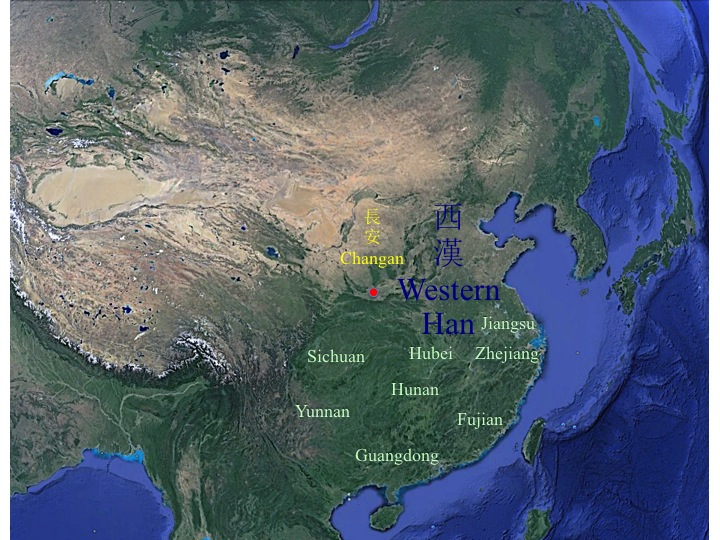
Tea was once native to the remote regions of the south where it was first gathered as a wild plant and then later cultivated as a domesticated crop. Whether as wild or cultivated produce, tea was traded, the demand for the leaf influencing the spread of the tea plant to the lower reaches of the Yangzi. In time, much of the south produced tea of such quality that it was exacted as provincial tribute and sent north to the imperial palace during the Han dynasty.
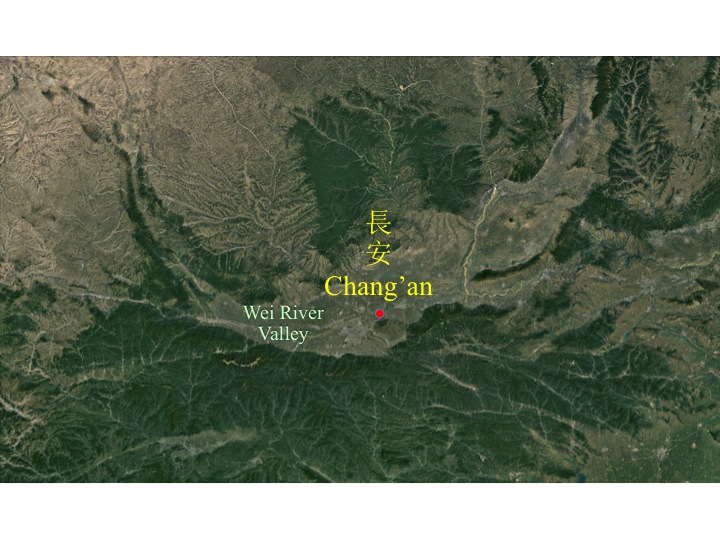
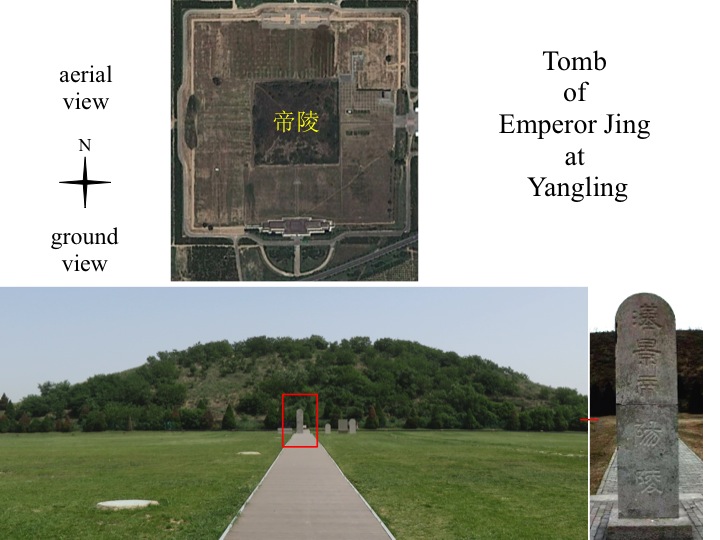
Evidence of tea as tribute was discovered in the Wei River Valley at a Western Han necropolis in the northern suburbs of the ancient capital of Chang’an, present Xi’an, Shaanxi. The site, which is known as the Yangling Mausolea, consists of two pyrimidal mounds, the tombs of Emperor Jing and his empress.
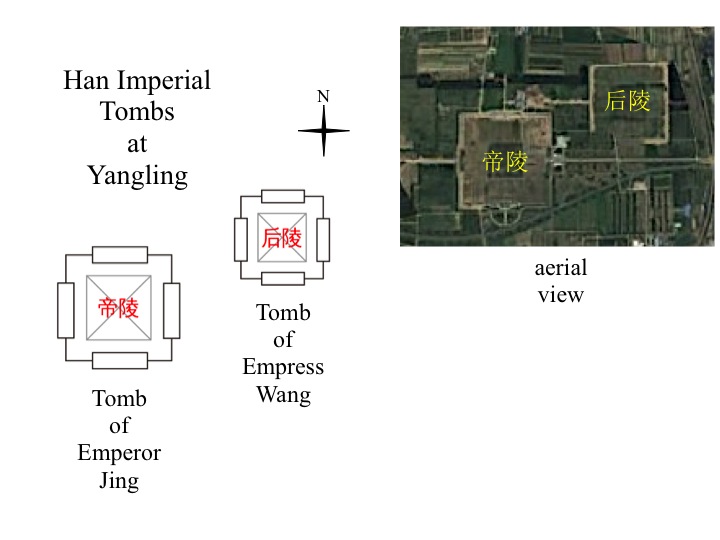
Emperor Jing was the sixth ruler of the Han dynasty; his wife Empress Wang was later buried in an adjacent smaller tomb.
Archaeological investigations of the emperor’s tomb revealed eighty-six outer trenches radiating perpendicular from the four sides of the mound, each long rectangular pit containing funerary goods sacrificed to the dead.
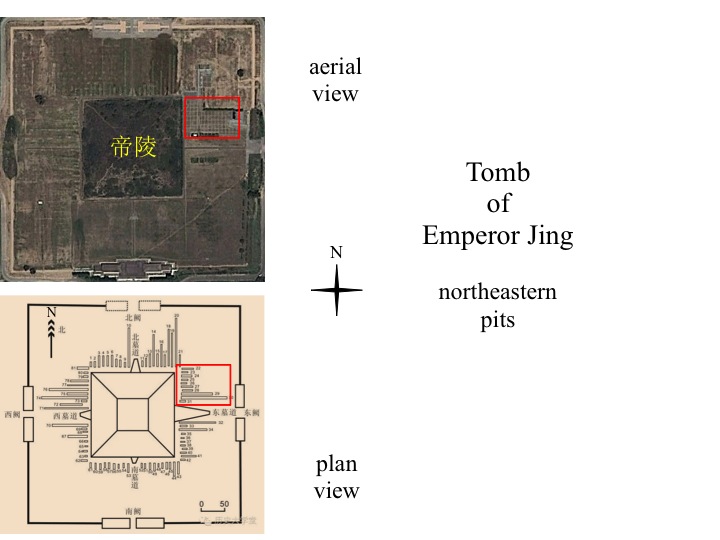
Two pits – designated DK 14 and DK 15 – in the northeast quadrant hold rows of terracotta figures that represent the courtiers, guards, and retainers meant to attend the emperor in the afterlife.
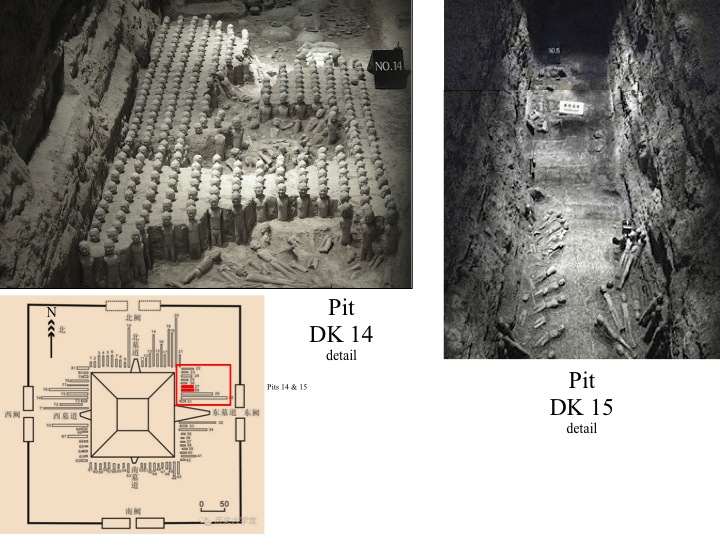
At the eastern end of DK 15, the matted and partially decomposed remnants of organic matter left a large rectangular stain on the earthern floor. Analysis of the fragments showed a mix of seeds, including foxtail millet (Setaria italica), broomcorn millet (Panicum miliaceum), rice (Oryza sativa) and domesticated chenopod (Chenopodium giganteum).
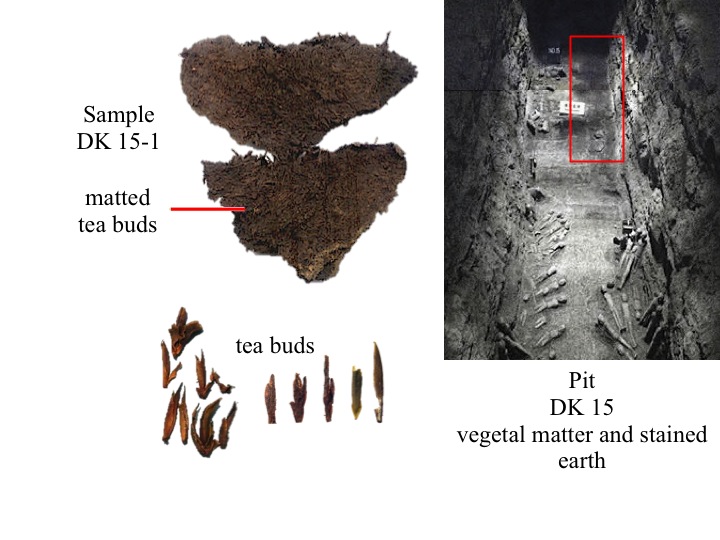
The sample DK 15-1, however, was a mass of plant leaves in a dark brown brick shape: tea. Taxonomic identification of the remnant leaves as tea (Camellia sinensis) was determined by chemical analysis and the examination of plant crystals. Abundant levels of both caffeine and theanine established the leaves as tea, while the ample presence of calcium phytoliths or plant crystals, the types and shapes of which are distinctive to tea, also confirmed the leaves as tea.
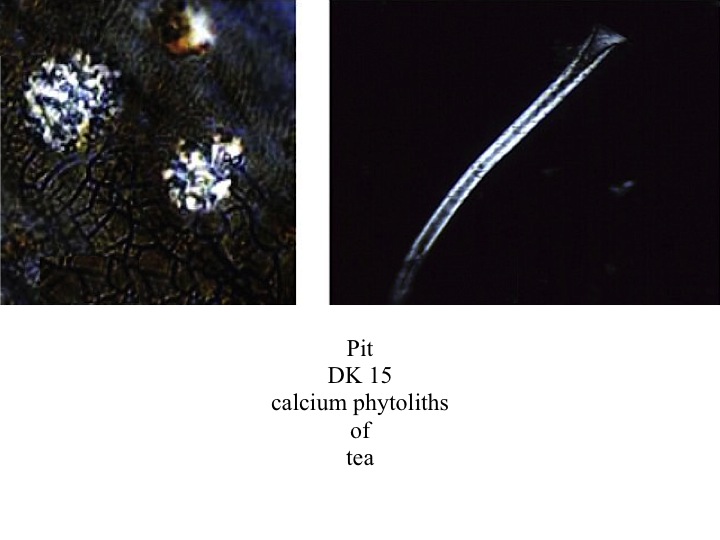
The matted remnants of tea revealed that the leaves consisted uniformly of leaf buds, that is to say, only the premium part of the plant was selected and sent to the emperor as tribute. As with all of the other funerary goods in the tomb, the tea was a sacrificial offering to the deceased, and like the grains of millet and rice, probably came from the palace stores.
Sources
Houyuan Lu, Jianping Zhang, Yimin Yang, Xiaoyan Yang, Baiqing Xu, Wuzhan Yang, Tao Tong, Shubo Jin, Caiming Shen, Huiyun Rao, Xingguo Li, Hongliang Lu, Dorian Q. Fuller, Luo Wang, Can Wang, Deke Xu, and Naiqin Wu, “Earliest Tea As Evidence For One Branch Of The Silk Road Across The Tibetan Plateau,” Scientific Reports 6, Article number: 18955 (2016) and Jianping Zhang, Houyuan Lu, and Linpei Huang, “Calciphytoliths (calcium oxalate crystals) analysis for the identification of decayed tea plants (Camellia sinensis L.)” Scientific Reports 4, Article number: 6703 (2014).
Notes
Emperor Jing of the Han (Han Jingdi 漢景帝, né Liu Qi 劉啟, 188-141 B.C.E.), reigned 157-141 B.C.E.
Empress Wang (née Wang Zhi 王娡, 173-126 B.C.E.); consort to Crown Prince Liu Qi, ca. 168 B.C.E.; empress to Emperor Jing, 150 B.C.E.; dowager empress to Emperor Wu, 141 B.C.E.
Baisaō’s Verse on Tea
眠雲臥石
Kō Yūgai of the Edo Period
Verse on Tea
Going far to China in search of the sacred shoots
Old Eisai brought them back to sow in our land
The taste of Uji tea is imbued with Nature’s essence
Worthy of pity, people talk only of color and scent
Awkwardly done at the request of Nishida Eishi
Written by the eighty-nine year old man, Kō Yūgai
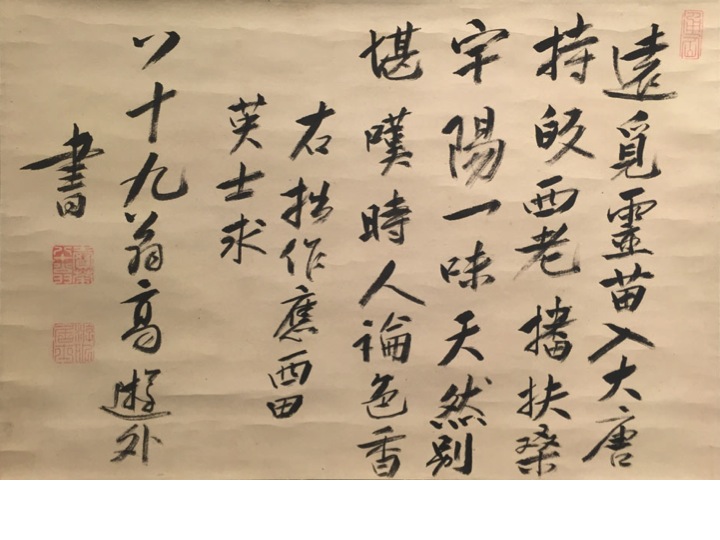
江戸時代 高遊外
茶詩
遠息靈葡入大唐
持歸西老播狀桑
宇陽一味天然戮堪
嘆時人論色香
右拙作應西田英士求
八十九翁 高遊外書
Kō Yūgai 高遊外 was a tea seller who lived in Kyoto during the eighteenth century. At the age of eleven, he became a novice at a Zen monastery affiliated with the Ōbaku sect and took the religious name Gekkai Genshō 月海元昭. After decades as a monk in Kyushu province, he moved to Kyoto where he made a living selling tea, adopting the name Baisaō 賣茶翁, Old Tea Seller. He frequented the scenic spots around the ancient capital, preparing and serving tea to passersby, never charging them but always accepting donations. In his eighties, when he could no long carry his equipage, he burned his tea case and devoted himself to calligraphy. This work on tea was written in the last year of his life.
Note
Compare Norman Waddell, Baisaō, The Old Tea Seller: Life and Zen Poetry in 18th Century Kyoto (Berkekely: Counterpoint, 2008), pp. 118-119.
Figure
Kō Yūgai 高遊外 (1675–1763)
Verse on Tea, 1763
Japan: Edo period
Hanging scroll: ink on paper
41.3 x 27.9 cm.
Saint Louis Art Museum
215:1986
A Little Tea Book
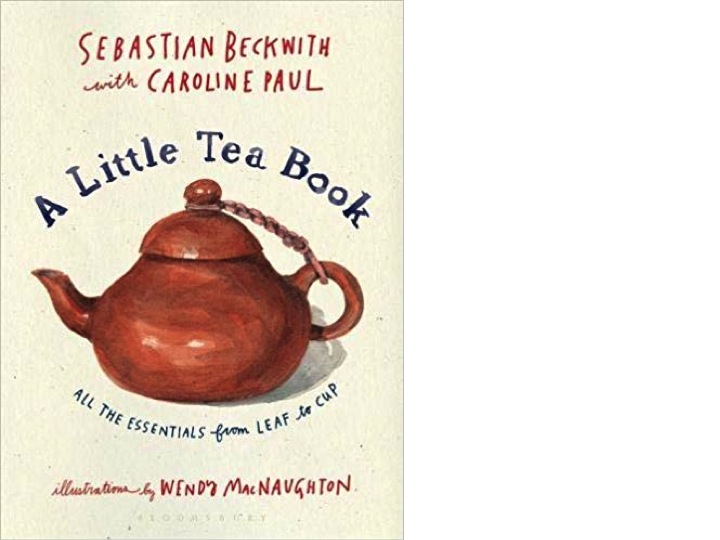
In the introduction to A Little Tea Book, Sebastian Beckwith and Caroline Paul declare that its contents are devoted to the reader, stating that the small volume truly “is for you.” Take them at their word, and you are amply rewarded by clear and simple explanations of the tea plant and leaf in a series of straightforward narratives on over a dozen aspects of tea, many illustrated by Wendy MacNaughton and her vibrant watercolors.
Throughout the little book, tea is presented as stepping stones that cross many borders, “not only geographic boundaries but political, socioeconomic, cultural, and religious ones as well.” Beckwith describes the art of tea as a process of exploration and invites us all to share in the journey, a tea trek captured in part by his many travel photographs and keen eye for detail, but best of all by his stories of searching the remote regions of Asia for the rarest and most elusive forms of the leaf. In just over one hundred twenty pages or so, Beckwith proves to be a singularly outstanding guide.
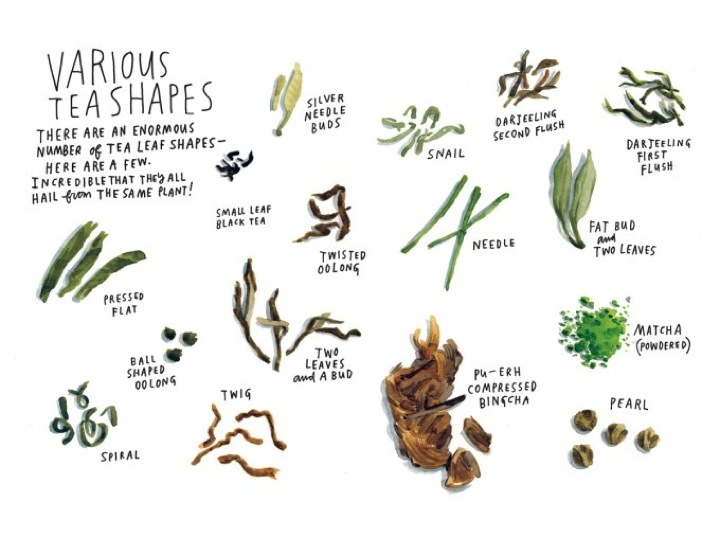
Notable explanations of tea include the distinctions between Camellia sinensis as a plant species, Camellia sinensis sinensis and Camellia sinensis assamica as varietals, as well as tea plants that are bred as cultivars. Beckwith observes the role of the tea green leafhopper (Empoasca (Matsumurasca) onukii Matsuda): the presence and bite of the bug on a leaf produces a defensive response by the plant and the release of chemicals that effect the creation of Oriental Beauty, a wulong tea of exceptional sweetness and aroma. Like the Tang tea master Lu Yu, Beckwith describes water – a much neglected subject in tea – especially the stages of boiling and the look of the hot liquid, all wonderfully illustrated with corresponding temperatures.
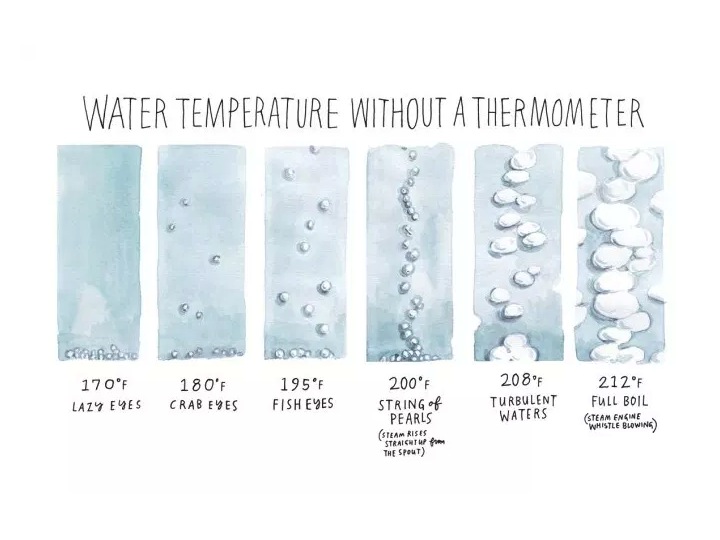
Even the scum atop boiled water, which Lu Yu once likened to “dark mica,” is noted and attributed by Beckwith to hard water. Flavors are described as categories: fruit, floral, marine, mineral, sweet, spice, wood, and earth. Vegetal and herbal might qualify as well. Of them all, marine properly describes the fish, seaweed, and kelp flavors of some teas.
Here and there, Beckwith likens tea to fine wine. It is an apt comparison, for the character and quality of bush and vine are influenced by terroir – soil, topography, geology, and climate – the age of the plants, horticulture, harvest, handling, processing, and storage. Indeed, Beckwith goes a step further than analogy and offers several recipes that mix tea and spirits: matcha and shochu, jasmine pearls with vodka, Earl Grey with gin, and sencha and rum.
Perhaps the most important notion in the book is Beckwith’s belief in “rules of thumb rather than rules” regarding the preparation, service, and enjoyment of tea. Rule of thumb is precisely the method used by tea masters from antiquity to the present. The many variables of tea, those changeable factors of water, heat, utensils, and time, require the practice of what the ancients called tasting tea: determining through experimentation how a tea, any tea, is best brewed to exhibit its fullest expression of color, aroma, and flavor.
A Little Tea Book: All the Essentials from Leaf to Cup
Sebastian Beckwith
with Caroline Paul and illustrated by Wendy MacNaughton
New York: Bloomsbury Publishing
2018
Sending Lu Hongjian Off to Pick Tea at Qixia Temple
眠雲臥石
Huangfu Ran of the Tang
Sending Lu Hongjian Off to Pick Tea at Qixia Temple
Gathering tea is not plucking greens:
Far, far away rises the rim of the cliff.
Leaves cloaked by a warm spring wind,
Baskets filled by sunrise.
Old friends on the temple path,
Now and then spending the night with the recluse.
On our sad parting I ask,
Whenever shall we meet again for a brimful bowl of floral tea…
唐·皇甫冉
送陸鴻漸棲霞寺採茶
採茶非採菉
遠遠上層崖
布葉春風暖
盈筐白日斜
舊知山寺路
時宿野人家
借問王孫草
何時泛椀花
Commentary
The harvesting of fine tea is very different from the gathering of garden vegetables. Unlike cultivated greens and kitchen herbs, superior tea plants grow wild among high cliffs, and the climb to them is difficult. In springtime, tea is fostered by sunshine and warm winds. Its leaves, however, are collected in the cool dark hours of the early morning, the baskets filled before dawn.
Lu Yu 陸羽 (ca. 733-804) once traveled to Nanjing where he resided at Qixia Temple, a monastery renowned for its tea gardens. During his brief residency at the monastery, Lu Yu lived in a hermitage where he received Huangfu Ran 皇甫冉 (ca. 714-765), a friend who came to visit with him. On his departure, Huang recalled their farewells in his poem. Taking Lu Yu’s hand, Huangfu Ran wondered when they would meet again and have the pleasure of drinking bowls overflowing with hua 花, the frothy floral essence of tea.
Source
Huangfu Ran 皇甫冉 (ca. 714-765), Song Lu Hongjiang Qixia si caicha 送陸鴻漸棲霞寺採茶 in Cao Yin 曹寅 (1658-1712 A.D.) and Peng Dingqiu 彭定求 (1645-1719 A.D.) et al., comps, Quan Tangshi 全唐詩 (Complete Poetry of the Tang Dynasty, 1705), juan 210.